What is the flower meaning of Patrinia (Ominaeshi)? A detailed look at its history too!

What is the flower language of Ominaeshi (Patrinia scabiosifolia)? We'll also tell you about its history in detail!
Ominaeshi (Patrinia scabiosifolia), which blooms with small yellow flowers in the autumn fields and mountains.
Known as one of the seven autumn flowers, it is a flower that has been cherished by Japanese people since ancient times.
It is a charming flower often used in ikebana and flower arrangements, but do you know what kind of flower language and history Ominaeshi has?
This article will thoroughly explain everything about Ominaeshi, from its flower language to its name origin, history, and even interesting Ominaeshi trivia.
Why not explore the profound world of Ominaeshi and be captivated by its charm? You will definitely want to decorate with Ominaeshi after reading this!
Basic Information about Ominaeshi (Patrinia scabiosifolia)

First, let's look at some basic information about Ominaeshi.
What kind of flower is Ominaeshi (Patrinia scabiosifolia)?
| Plant Name | Ominaeshi (Patrinia scabiosifolia) |
| Scientific Name |
Patrinia scabiosifolia |
| Family | Caprifoliaceae |
| Genus | Patrinia |
| Origin | East Asia |
| Blooming Season | Around July to September |
Ominaeshi is a perennial plant of the Caprifoliaceae family. There was once a Patrinia family.
It is characterized by small yellow flowers gathered at the tips of slender stems.
Its swaying appearance in the wind is refreshing, signaling the arrival of autumn. Ominaeshi has appeared in many waka poems and stories as one of the representative flowers of autumn.
What is the origin of the name Ominaeshi (Patrinia scabiosifolia)?
The name Ominaeshi is said to be a combination of "omina," meaning "woman," and "eshi," meaning "beautiful."
The prevailing theory is that it was named this because the flower's beauty was said to be so overwhelming that it could even surpass that of a beautiful woman.
Also, the kanji "女郎花" (Ominaeshi) was derived from this origin.
Where does Ominaeshi (Patrinia scabiosifolia) grow naturally?
Ominaeshi grows widely in sunny places such as mountains, plateaus, and riverbanks throughout Japan.
It was once a common sight in the satoyama (traditional rural landscapes) of Japan.
Outside of Japan, it is also widely distributed in China and the Korean Peninsula.
What is the English name for Ominaeshi (Patrinia scabiosifolia)?
The English name for Ominaeshi is "Golden Lace Flower," which describes its appearance.
"Golden Lace Flower" was named after its golden, lace-like flowers.
It is also sometimes called "Maiden Flower," which is a direct translation of the kanji "女郎花."
What is the flower language of Ominaeshi (Patrinia scabiosifolia)?

Many of Ominaeshi's flower meanings derive from its delicate appearance and history.
1. "Beauty"
This is a flower meaning that is also the origin of the name Ominaeshi.
Its delicate and pure beauty, said to be so overwhelming that it could surpass that of a beautiful woman, gave rise to the flower meaning "beauty."
When giving it as a gift to a loved one, adding a message praising their beauty will convey your feelings even more.
It might be a little cheesy and embarrassing, but I think it will be well-received!
2. "Fleeting love"
Ominaeshi is one of the seven autumn flowers and has been sung about in many waka poems since ancient times.
Many of these waka poems expressed the feelings of unrequited or poignant love, along with the loneliness of autumn, which led to the flower meaning "fleeting love."
It is a romantic and somewhat melancholic flower meaning that graces classical literature.
3. "Kindness"
Ominaeshi has another side to it that is unimaginable from its beautiful appearance.
The root of Ominaeshi has a history of being used as a traditional Chinese medicine for a long time and was believed to have the effect of healing illnesses.
It is said that the flower meaning "kindness" originated from this aspect of helping human health.
What is the history of Ominaeshi (Patrinia scabiosifolia)?

Ominaeshi is a flower that has been deeply involved in Japanese history and culture.
Cherished as one of the "Seven Autumn Herbs" since the Nara period
The history of Ominaeshi begins with its appearance in the "Manyoshu," Japan's oldest anthology of poetry.
It appeared in a poem about the seven autumn herbs by the poet Yamanoe Okura, and from that time, it became a beloved flower representing autumn. The origin of the word Ominaeshi is said to be "onna meshi" (woman's meal), comparing the small petals to grains of rice.
At that time, it was written as "ominaneshi."
(Reference: Hitotsubashi Shokujukai "Seven Autumn Herbs")
Click here for details on the Seven Autumn Herbs ▶︎
Color combinations of layered clothing (Kasane no Irome)
Heian aristocrats expressed a sense of season and aesthetic sensibility through the color combinations of layered clothing, such as the jūnihitoe.
One of these "color combinations of layered clothing" imitated the colors of ominaeshi.
The delicate color scheme, with a yellow outer fabric layered over a light green lining, was one of the colors that symbolized the aesthetic sensibility of the time.
(Reference: Japanese Costume History "Ominaeshi")
A flower used as traditional Chinese medicine
The roots and whole plant of Ominaeshi have been used as a crude drug called "Haishōkon" since ancient times.
It has a history of being used in folk remedies, with effects such as fever reduction and anti-inflammatory properties.
(Reference: Nara Pharmaceutical Association "Ominaeshi")
Ominaeshi is still loved today
Even today, Ominaeshi continues to be cherished as one of the seven autumn flowers.
It is enjoyed in various settings as an ornamental plant, in flower beds, tea ceremony flowers, and cut flowers, and it reminds us of the arrival of autumn.
It is also a commonly used flower material in ikebana lessons, and we florists often use it to express the season as an autumn flower.
Trivia about Ominaeshi (Patrinia scabiosifolia)

Here are some interesting tidbits about Ominaeshi that you might enjoy.
You might want to share them with someone when you spot an Ominaeshi flower...?
"Otokoeshi" also exists!?
Ominaeshi has a closely related species called "Otokoeshi," which looks very similar.
While Ominaeshi has yellow flowers and gives a delicate impression, Otokoeshi blooms with white flowers and gives a strong impression.
From this contrast, there is an interesting trivia that they were named "female" and "male" flowers, respectively.
Its unique scent became a hot topic...
Ominaeshi has almost no fragrance when fresh.
However, when dried, it emits a unique odor reminiscent of rotten soy sauce. Because of this smell, the crude drug name in Chinese medicine was given as "Haishō" (rotten soy sauce).
It is an unexpected side to its beautiful appearance.
A popular flower that even appears in "The Tale of Genji"!!
"The Tale of Genji," which depicts the lives of Heian aristocrats, features Ominaeshi multiple times.
At that time, women expressed their elegance and charm through the flowers blooming in their gardens, and Ominaeshi symbolized a graceful woman.
The fact that Hikaru Genji visits a mansion where Ominaeshi flowers are blooming suggests that it was a popular flower.
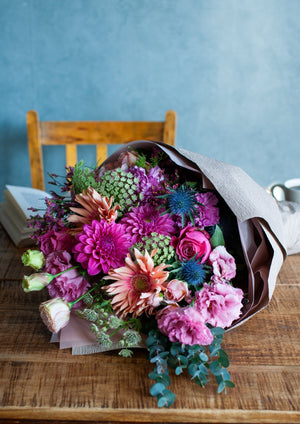
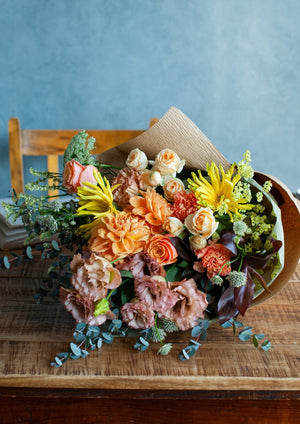
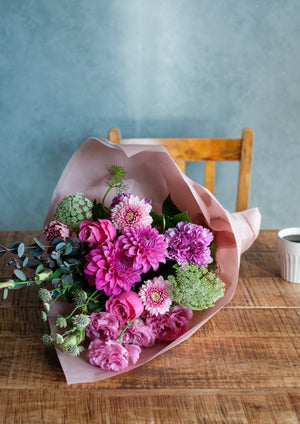
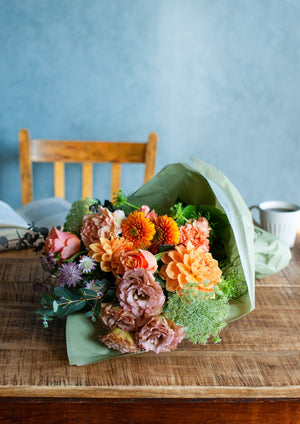
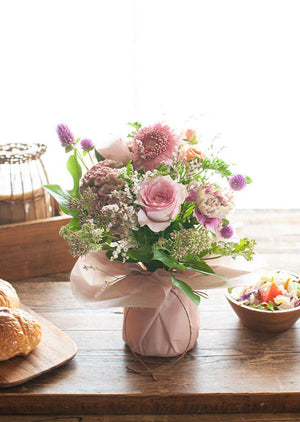
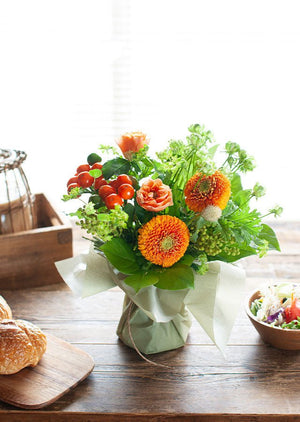
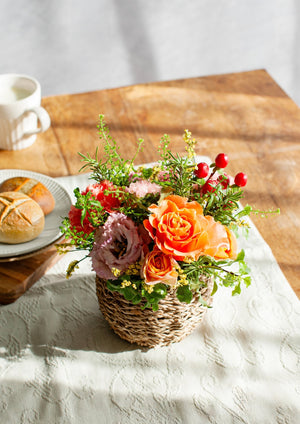
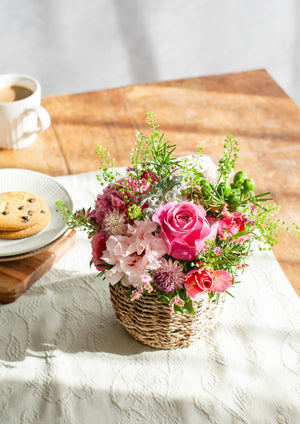
&YOUKAEN is selling autumn flower arrangements!

&YOUKAEN is selling autumn flower arrangements.
We use seasonal flowers that are only available during this season to create stylish arrangements.
Our florists carefully select seasonal flowers from the market and create each arrangement with attention to quality.
Recommended for birthdays, wedding anniversaries, home decor, and more. Please give it as a gift to your loved ones.
Stylish flower arrangements using autumn flowers

Limited Edition Western-style Flower Arrangement L "kogane"
¥9,900-
Summary

Ominaeshi is an elegant flower with flower meanings such as "beauty" and "fleeting love."
It has been cherished by Japanese people since ancient times as one of the seven autumn flowers and as a flower that colored classical literature.
Decorating with Ominaeshi will allow you to feel the rich history and culture of Japan.
&YOUKAEN offers bouquets and flower arrangements using seasonal flowers.
Highly recommended as a gift for birthdays, wedding anniversaries, farewell parties, or as a daily thank-you gift.
Our florists create each one with care. Please choose &YOUKAEN's flower gifts for your loved ones.
◆Revision History
December 9, 2025: Corrected some years. Added references and sources.
Aug 12, 2025