The Language and History of Lilies

About the Lily Flower Language and History
Lilies are attractive flowers with a large, majestic appearance and a porcelain-like texture. Their pleasant fragrance and significant impact make them popular among many people.
They are versatile flowers, used for everything from weddings to funerals, birthdays, and wedding anniversaries as floral gifts, and are often found in flower shops.
This time, we will delve into the details of the lily flower. We will introduce its flower language and history.
Please use this as a reference when choosing a gift.
What kind of flower is a lily?

| Plant Name | Lily |
| Scientific Name | Lilium |
| Family | Liliaceae |
| Genus | Lilium |
| Origin | Widespread across the Northern Hemisphere |
| Blooming Season | May to August |
Although these flowers are now available year-round, they were originally a symbol of summer. One stem can bear two to three large flowers.
When they bloom, their petals spread wide, and they release pollen. They also emit a sweet fragrance, which is used in perfumes and deodorizers.
They come in a wide variety of bloom types and rich color variations. Some lilies can grow to about 2 meters in height.
In large parks, you can often see wild lilies (yama-yuri) growing. Seeing lilies bloom always makes one think that summer is coming.
What is the origin of the name "Yuri" (lily)?

The name "yuri" (lily) is said to be inspired by the way lily flowers sway in the wind. It was originally called "yusuri," which then changed to "yuri."
There is another theory that because a lily bulb consists of many overlapping scales, it was named "hyakugo" (one hundred layers) or "hyakuri" (one hundred lilies), which became "yuri."
There is also a theory dating back to the Kojiki, suggesting it comes from "yori" in Isuke Yorihime.
As such an ancient flower deeply rooted in culture, it has various theories regarding its name.
What is the language of lilies?

Lilies have many flower meanings. "Purity," "innocence," "dignity," "refined beauty," "noble character," "charm," "declaration of love," and "innocence" are some of them.
These dignified meanings are inspired by the lily's delicate appearance and pure white color.
The meanings "purity" and "innocence" in particular stem from the white lily being a symbol of the Virgin Mary.
In "The Annunciation," which depicts Mary learning of her conception of Christ, angels are typically shown holding lilies.
White Lily Flower Language

The flower meanings of white lilies are "purity," "innocence," and "dignity." These meanings are associated with their pure white color.
However, be careful when presenting a single white lily, as it can signify "a flower for the deceased."
When gifting white flowers, it's essential to combine them with other flowers, or present them as part of a bouquet or floral arrangement!
Pink Lily Flower Language

The flower meanings of pink lilies are "elegance," "wealth and prosperity," and "vanity."
The meaning "elegance" comes from the gentle, feminine, and beautiful pink hue. "Vanity" is attributed to the pink lily appearing as a high-class, unattainable flower.
"Wealth and prosperity" is a meaning derived from the lily's historical symbolism as a sign of abundance.
Yellow Lily Flower Language

The flower meanings of yellow lilies are "cheerfulness," "anxiety," and "falsehood." The bright yellow color of lilies stands out vividly in nature.
This is why "cheerfulness" is one of its meanings. "Anxiety" and "falsehood" are associated with the yellow color because yellow is considered an ominous color in Europe.
Yellow is the color of the clothes worn by Judas, who betrayed Christ.
Red Lily Flower Language

The flower meaning of the red lily is "vanity." This meaning is derived from Jesus Christ.
When Christ was being crucified, many flowers bowed their heads, unable to look at him.
However, the lily, proud of its beauty, is said to have held its head high, believing it could encourage Christ.
But when Christ looked back with sorrowful eyes, the lily realized its arrogance, blushed, and bowed its head.
This is why the red lily is associated with the meaning "vanity."
Orange Lily Flower Language

The flower meanings of orange lilies are "brilliance" and "joy." These meanings are derived from the bright orange color.
Orange conveys positive impressions such as warmth, brightness, and energy. It seems suitable for gifts for grand openings or business launches!
Also, many naturally growing lilies are orange, and they bloom brilliantly in the fields, which is why "brilliance" is one of their meanings.
Does the flower meaning of lilies change by type?

There are many varieties of lilies. In Japan alone, there are as many as 15 wild species!
Here, we will explain the flower meanings of lilies commonly found in flower and garden shops.
We hope this information will be useful when choosing a gift.
Easter Lily Flower Language

The Easter lily is a type of lily characterized by its gun-like, protruding flower shape. It is native to Japan, growing wild from Kyushu to Okinawa.
The roots of Easter lilies are called "yurine" and are a traditional ingredient used in Kyoto cuisine. Many people have probably tasted them.
The flower meanings of the Easter lily are "purity," "dignity," and "sweetness." These meanings are given because white lilies symbolize the purity of the Virgin Mary.
Sukashiyuri Flower Language

Sukashiyuri is a lily characterized by its orange color and is native to Japan. It grows wild in the Chubu region and northward, along coasts and cliffs.
While lilies are typically known for their sweet fragrance, the Sukashiyuri is unique in that it has no scent.
The flower meanings of Sukashiyuri are "attracting attention," "unadorned beauty," "mysterious beauty," and "falsehood." Sukashiyuri blooms facing upwards, which is why it is associated with the meaning "attracting attention."
Casablanca Flower Language

Also known as the "Queen of Lilies," this flower is characterized by its beauty, living up to its nickname, and its strong fragrance.
It boasts an exceptionally large bloom among lilies and is often used in formal settings such as hotels.
The flower meanings of Casablanca are "purity," "blessing," "sweetness," "magnificent beauty," "dignity," "innocence," "nobility," and "grand love." It has many flower meanings.
Himeyuri (Tiny Lily) Flower Language

This lily blooms with star-shaped flowers. It produces red to orange flowers and is known to be used in traditional Chinese medicine.
The name "Himeyuri" (princess lily) was given due to its small and delicate appearance. Since it blooms in summer, seeing Himeyuri flowers makes one feel that "summer has arrived."
The flower meanings of Himeyuri are "pride," "nobility," and "innocence." The meaning "innocence" is particularly said to be derived from the Himeyuri's simple and pure appearance.
About the history of lilies

Since lilies originally grew wild in Japan, descriptions of their origins also appear in the "Kojiki" (such as the story of Empress Isukeyorihime, wife of Emperor Jimmu). It is a plant with a very long history.
In Europe, 'Madonna Lilies' have been cultivated since prehistoric times and have been inseparable from religion. Lily flowers have been depicted on ancient coins and in ancient Oriental artworks, indicating their close connection to human history. They were also frequently used as medicine, with a history of being used to treat skin diseases. The lily is considered one of the most beautiful flowers and is the national flower of the Vatican (Holy See) as a 'sacred plant'. Lilies are very familiar plants in Europe.
(Reference: Nara Prefecture Official Website Nara Kiki Manyo "Encounter at Sai River")
(Reference: PictureThis Plant Encyclopedia "Madonna Lily")
History of Lilies in Japan

Japan has an abundance of wild lily species, and in ancient times, many lilies grew naturally. Therefore, there are not many old records indicating intentional cultivation. Before their widespread appreciation for ornamental purposes, lilies were primarily used for food (lily bulbs) and medicine.
Later, during the gardening boom of the Edo period, common people began to grow lilies in their gardens. History took a significant turn in the Meiji era. Japanese lilies were highly valued overseas, becoming a significant export product traded at high prices, leading to serious domestic cultivation. By the Taisho era, cultivation techniques were established, and a production system that continues to this day was put in place.
(Reference: National Archives of Japan, Japan Center for Asian Historical Records "Export of Lily Bulbs ~Japanese Wildflowers Cherished in Europe and America~")
About Siebold and Lilies

The person who brought Japanese lilies to Europe and ignited a boom was Siebold, one of the three scholars of Dejima. Although a physician, he was also an enthusiastic naturalist and brought back Japanese plants in bulb form.
Many seeds perished during his return to his home country, but the lily bulbs survived, and the flowers that bloomed from them were praised as "jewel-like beauty." Their beauty shocked Europeans, and in the horticulture world of the time, they were traded at speculative high prices, creating a kind of "lily bubble" frenzy, it is said.
Hearing these rumors, Europeans successively came to Japan and began to acquire large quantities of lilies from Japan. In particular, the Easter lily, due to its hardiness and beauty, replaced the previously dominant Madonna lily and became established worldwide as a flower for Easter celebrations.
(Reference: Kochi Prefectural Government, Agriculture Promotion Department: Easter Lily)
(Reference: J-STAGE "Breeding of lilies and tulips—Interspecific hybridization and genetic background—")
Recommended Lily Flower Gifts?

Lilies are very large flowers. They are also easily damaged, and presenting a single lily implies "a tribute to the deceased," so it should be avoided.
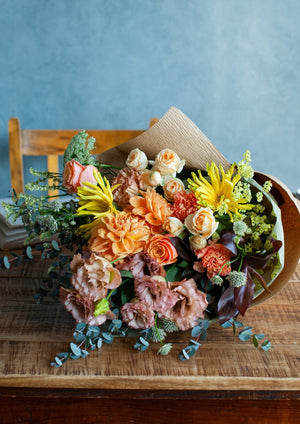
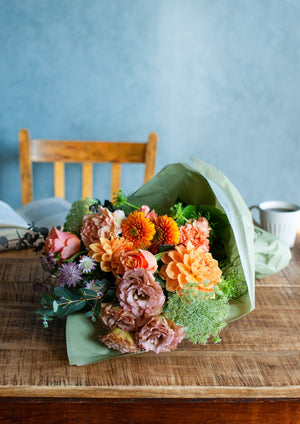
When gifting lilies, it is best to present them as a floral gift such as a bouquet or a floral arrangement.
Here, we will explain the appropriate occasions for gifting floral gifts that include lilies. Since they are impactful flowers, they are recommended for celebratory occasions.
"Bouquets" perfect for farewell and welcome parties

Bouquets with lilies are recommended as gifts for welcome and farewell parties. Bouquets containing lilies have a powerful impact, and the size of the bouquet naturally becomes large.
This makes them photogenic, and the bouquet will stand out even if many people are gathered around. For the same reason, they are also recommended for presenting bouquets to parents at weddings.
Bright red & white, or yellow & white colors are good. Give a lily bouquet to make it an unforgettable special day.
"Flower Arrangements" for Grand Openings, Business Launches, etc.

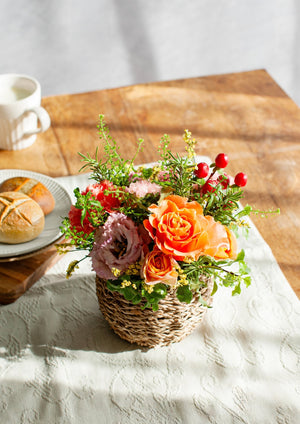
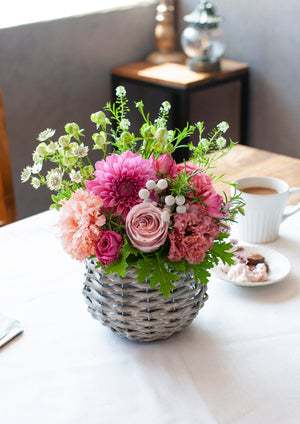
Lilies bloom with large flowers. When incorporated into a flower arrangement, they create an impactful display that catches the eye of many.
For new beginnings such as grand openings or business launches, please consider gifting a flower arrangement with lilies. It is sure to leave a lasting impression on customers visiting the establishment for the first time.
When gifting, be sure to include a message card to send your well wishes! Vibrant colors like yellow or pink are recommended.
Summary

The flower meanings of lilies are "purity," "innocence," "dignity," "refined beauty," "noble character," "charm," "declaration of love," and "innocence."
As a flower known to symbolize the Virgin Mary, it carries solemn meanings. It's a flower that can be given for any occasion.
Lilies have large, beautiful flowers and vibrant colors, making them perfect gifts for loved ones. However, beware that giving a single lily can signify "mourning for the deceased." When gifting for a celebratory occasion, always present them as a floral arrangement or a bouquet!
◆Revision History
December 11, 2025: Partial year correction. References and sources added.
Feb 26, 2025