How to choose appropriate Obon and year-end gifts during a period of mourning

Choosing Appropriate Ochugen and Oseibo During Mourning
"My family member passed away, and I'm in mourning. Is it okay to send Ochugen or Oseibo?" "What should I be careful about when sending gifts to someone in mourning?"
When you lose a loved one and enter a period of mourning, many questions and anxieties naturally arise.
Especially regarding seasonal greetings like Ochugen and Oseibo, many people are unsure about the proper etiquette.
The mourning period is a precious time to remember the deceased and for the bereaved family to overcome their grief. Gifts given during this time require even deeper consideration than usual.
This article, from a florist's perspective, clearly explains the appropriate etiquette for Ochugen and Oseibo during mourning, how to choose items, when to send them, and how to respond when receiving them.
By reading this, you will be able to convey your heartfelt consideration without causing discomfort in sensitive situations.
Please use it as a reference.
What is Mourning? Basic Understanding

First, let's deepen our basic knowledge of mourning and understand its meaning and how to observe it.
The Period of Mourning and How to Observe It

Mourning (mōchū) refers to the period of "observing mourning" when a family member has passed away, during which one abstains from secular events and flamboyant activities to remember the deceased.
The general duration varies depending on the relationship with the deceased, as follows:
・Parents, spouse, children: Approximately 1 year
・Grandparents, siblings: Approximately 6 months
During this period, it is customary to refrain from participating in celebratory events (weddings, festivals, etc.) and avoid ostentatious attire, focusing instead on grieving for the deceased.
The Relationship Between Mourning and Annual Events

Particular caution is required during mourning concerning New Year's greetings (part of New Year's cards and Oseibo) and celebratory events.
About Imi-chū (Period of Deep Mourning)
The period of 49 days after a person's death is called "Imi-chū." During this time, it is considered especially strict to avoid celebrations and festive events, and one should act discreetly.
About Mō-chū (Mourning Period)
This is the period from the end of Imi-chū until the end of mourning. While not as strict as Imi-chū, it remains a time to remember the deceased.
Oseibo is a year-end greeting, and Ochugen is a summer greeting. While not originally celebratory events, they can sometimes be perceived as festive gifts.
Therefore, special consideration is required for Ochugen and Oseibo during the mourning period.
Manners to Be Mindful of During Mourning

The fundamental etiquette during mourning is to be empathetic to the feelings of the deceased and the bereaved family.
・Avoid celebratory words like "Congratulations."
・Refrain from lavish gifts or elaborate packaging.
・Prioritize the feelings of the bereaved family grieving the deceased, and be mindful of your words and actions.
How to Express Mourning

When conveying one's mourning status, the following methods are common:
Mourning Postcard (Mochu Hagaki)
Sent at the end of the year as a "New Year's greeting deferral notice."
It informs others that you will refrain from exchanging New Year's cards, and sometimes expresses the intent to decline gifts such as Oseibo.
The appropriate time to send it is from early November to early December, before the recipient begins preparing their New Year's cards.
Language Usage
"It's been a while" (go-busata shite orimasu) or other considerate language should be used, showing an attitude that is mindful of the other person's situation.
Ochugen/Oseibo and Their Relation to Mourning

During the mourning period, the etiquette for Ochugen and Oseibo differs depending on whether you are the giver or the receiver. We will explain how to handle each situation.
How to Send Ochugen and Oseibo During Mourning

If the sender is in mourning
If you are in mourning, you may wonder whether to send Ochugen or Oseibo.
Basic Approach
Ochugen and Oseibo are not celebratory gifts, so sending them itself is often considered acceptable.
However, there's a chance the recipient might think, "They're in mourning, why are they sending a gift?"
For a more polite approach...
If you are concerned, it is more polite to send the gift at a different time.
After the Ochugen period, send it as a "summer greeting" (shochu mimai) or "late summer greeting" (zansho mimai).
After the Oseibo period, send it as a "midwinter greeting" (kanchu mimai).
If the recipient is in mourning

If you wish to send Ochugen or Oseibo to someone in mourning, even greater consideration is required.
After the period of deep mourning (Imi-chū) is a guideline
It is generally considered acceptable to send Ochugen or Oseibo if 49 days (Imi-chū) have passed.
Consider the recipient's feelings
The bereaved family may still be deep in grief, having just lost a loved one.
Avoid flashy gifts or elaborate packaging, and choose a subdued item.
If you were close to the deceased...
It is a good idea to choose an item that can also serve as an offering, imbued with the meaning of remembering the deceased.
Gift inscription and noshi paper
・Gift inscription: "Ochugen" or "Oseibo" is generally fine, but if you're concerned, "Greetings" (go-aisatsu) or "Gratitude" (kansha) are also acceptable.
・Noshi paper: Instead of a red and white butterfly knot, choose plain white or black and white knot (for condolences), and apply it discreetly.
How to Decline Ochugen or Oseibo

If you wish to decline Ochugen or Oseibo gifts due to mourning, it is generally done by sending a mourning postcard.
It is good to include a message like, "Due to the mourning for the late [name], we regret to forgo New Year's greetings. We kindly ask you to also refrain from sending Ochugen/Oseibo or other thoughtful gestures."
If you contact them directly, it's important to explain the situation concisely and express gratitude for their thoughtfulness.
How to Express Gratitude During Mourning

Even during the mourning period, when you receive Ochugen or Oseibo, expressing your gratitude through a thank-you note or phone call is the most basic etiquette.
Even if it's difficult to send a gift, politely conveying your thanks helps maintain a good relationship with the other person.
Specific Examples of Situations Requiring Consideration

Consideration for Religions and Denominations
In Buddhist customs, meat and fish may be avoided. If you know the recipient's religion or denomination, choosing items and noshi paper that align with it shows greater respect.
Relationship with the Deceased
The deeper the relationship with the deceased, the deeper the grief of the bereaved family may be. Carefully consider the recipient's situation and strive for cautious handling.
Gifts Permitted During Mourning

When giving gifts during a mourning period, what kind of items should you choose to avoid being impolite?
Key Points for Choosing Gifts

It is generally safer to choose Ochugen or Oseibo gifts during mourning that can be interpreted as "remembrance of the deceased" or "comfort to the bereaved family," rather than as a "celebration."
"Consumables" are fundamental
Food, beverages (excluding alcohol), soap, detergent, and other items that do not linger and do not burden the recipient are safe choices.
Practicality
Everyday consumables are less burdensome and appreciated by the bereaved family.
Subdued colors
Avoid flashy colors and designs; choose subdued shades. White, gray, navy, and green are appropriate.
Long-lasting items
If gifting food, choose items with a long shelf life that can be consumed at the recipient's convenience.
Why Flowers Are Optimal

Flowers are particularly recommended as gifts during a period of mourning.
Meaning of healing and comfort
Flowers are a gift that offers quiet prayers for the deceased and has the effect of healing the grief of the bereaved family. Their beauty brings peace to the heart.
"Consumable" so it doesn't burden the recipient
Like food, flowers disappear after their viewing period, so they don't burden the recipient.
Subdued colors
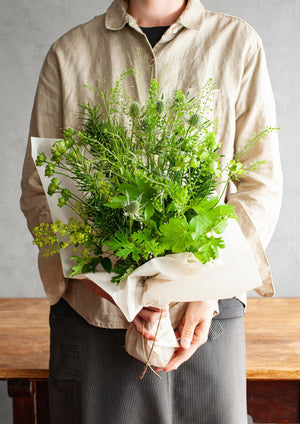
Arrangements based on white and green, or with pale pink and purple as accent colors, are appropriate.
Recommended Flower Gifts for Ochugen During Mourning

Seasonal Bouquet "Vert Green"
¥13,200-
Consideration for the Recipient

Religion/Denomination
In Buddhist traditions, meat and fish may be prohibited. If you know the recipient's religion or denomination, choose gifts accordingly.
Recipient's Lifestyle
Avoid sending large quantities of food to someone living alone, or toys to a family without small children.
Price
Avoid overly expensive gifts, as they may make the recipient feel burdened to reciprocate.
Items to Avoid Depending on the Circumstances

Items that evoke celebrations
Avoid red and white confectionery, alcohol (especially celebratory sake), and other items typically used for festive occasions.
Items with flashy packaging or designs
Avoid items with bright wrapping paper or flashy designs, as they are not appropriate for a mourning atmosphere.
Perishable fresh sweets
It's best to avoid these as they might rush the recipient to consume them.
Customs Regarding Mourning by Region

In some regions, there may be a custom of sending Ochugen and Oseibo as usual even during the mourning period.
Especially for close relationships or recipients who value local customs, it may be a good idea to confirm beforehand.
Etiquette for Receiving Gifts During Mourning

If you receive Ochugen or Oseibo while in mourning, it's important to respond with appropriate etiquette.
How and When to Express Thanks

Once you receive an item, contact the sender with a thank-you note or call as soon as possible (ideally within one week).
Even during the mourning period, it is paramount to politely express your gratitude for the gift.
Even if you choose not to reciprocate due to "being in mourning," sending a thank-you message is essential.
Ways to Express Gratitude

In your thank-you note, concisely express your gratitude for the Ochugen or Oseibo received, acknowledge their thoughtfulness, and mention that you are in mourning.
An example is as follows:
"Thank you very much for the thoughtful Ochugen. As I am in mourning, I regret that I must refrain from sending a return gift. Please forgive me.
I hope for your continued friendship."
If flowers were sent, mentioning their beauty or calming effect would make for a more heartfelt thank-you.
Option to Decline Gifts

If you have already informed someone of your mourning period, yet they send a celebratory gift or an item you absolutely cannot accept, it is possible to politely decline it.
However, be careful to use cautious and polite language so as not to hurt their feelings.
What to Do After Receiving a Gift

If there's a possibility that the return thank-you postcard (mourning postcard) might be delayed, it's thoughtful to mention this in your thank-you note. Graciously accept the gift you received.
Other Considerations Related to Mourning

Beyond Ochugen and Oseibo, here are some other points to be mindful of during the mourning period.
The Role of Mourning Postcards

Mourning postcards play an important role in informing others that you will refrain from exchanging New Year's cards.
They should be sent between early November and early December, before New Year's card preparations begin in earnest.
Additionally, if you wish to decline Ochugen or Oseibo, it is common to state this on the mourning postcard.
Choosing to Cancel or Postpone Annual Events

There are many celebratory events, such as weddings and trips, that are generally considered to be avoided during mourning.
However, mourning has no legal binding force, and there is no need to unnecessarily restrict oneself.
It is important to prioritize the feelings of the bereaved family and the memory of the deceased, and to choose actions within a reasonable scope.
How to Enjoy Daily Life Even During Mourning

While remembering the deceased, it's also important not to excessively withdraw but to value daily life.
Decorating with flowers is one way to spend time peacefully.
The beauty and fragrance of flowers can soothe a heavy heart and deepen feelings of remembrance.
Florist Recommended! Flower Gifts to Lift Your Spirits

Stylish Natural Orange Arrangement L Size
¥9,900-
Laws and Religious Backgrounds of Mourning

Mourning is not legally mandated but is primarily based on individual customs and religious backgrounds.
Therefore, there are differences depending on the region and denomination. If you are unsure about etiquette, it is recommended to consult a close relative or an expert.
Summary

During the mourning period, whether you are giving or receiving Ochugen or Oseibo, the most important thing is a "sense of consideration" that remembers the deceased and empathizes with the bereaved family.
There are special etiquettes different from usual, such as shifting the timing, choosing appropriate items, and selecting the correct noshi paper. However, it's crucial not to be overly bound by formalities, but to convey your heartfelt thoughtfulness.
&YOUKAEN sells flower gifts made by professional florists. We also create subdued bouquets and arrangements suitable for Ochugen or Oseibo during mourning.
Please take a look at the "Ochugen category" below to find a gift that conveys your feelings.
Jul 09, 2025