Celebration Quick Reference Chart by Age: Recommended Flowers and Colors

Age-Based Celebration Guide: Recommended Flowers and Colors
There are various types of longevity celebrations, such as Kanreki (60th birthday) and Koki (70th birthday), but have you ever wondered, "What celebration is for what age?" or "What color flowers are best?"
In this article, from the perspective of a florist, we will carefully explain everything from the origin of longevity celebrations to an age-based guide, their meanings, traditional colors, and how to choose the perfect flowers for each celebration.
We have compiled this information in an easy-to-understand format, so please use it as a reference when celebrating.
About Longevity Celebrations

Longevity celebrations are traditional Japanese celebrations held to honor and show gratitude and respect to individuals who have reached milestone ages.
Origin of Longevity Celebrations
The origin of longevity celebrations dates back to a custom introduced from China during the Nara period.
Rooted in the "respect for elders" philosophy and the spirit of honoring longevity, these celebrations were initially observed among a select group of upper-class individuals such as aristocrats and samurai.
During the Nara period, "Ga no Iwai" was celebrated every ten years starting from age 40, but as life expectancy increased, longevity celebrations for older ages became established.
Over time, they spread among the common people during the Edo period and have been cherished ever since.
Are Longevity Celebrations Still Observed Today?
Even in modern times, with significantly extended life expectancies, longevity celebrations are still widely observed as important milestones in life.
They provide a wonderful opportunity for families and relatives to gather, offering a heartwarming occasion to express gratitude and wishes for good health directly.
For seniors, a celebration from their family is truly a joy beyond measure.
Typically, relatives gather for a meal, communicate via video calls, or exchange celebratory gifts.
Longevity Celebrations Start at 60!
Longevity celebrations begin at age 60 with Kanreki.
Kanreki is seen as a major life milestone and is famous for the custom of presenting a red padded vest.
Following this, longevity celebrations continue at various milestone ages.
Celebrations are even prepared for ages up to 120.
It's Best to Celebrate Longevity by Full Age
While it was once common to celebrate longevity using the traditional Japanese age counting system (kazoe-doshi), it is now standard to use full age (man-nenrei).
Kazoe-doshi counts a person as one year old at birth and adds one year on New Year's Day. Full age, on the other hand, adds one year on each birthday, aligning with modern age perception.
The choice of which to celebrate depends on family custom or the individual's preference, but if in doubt, celebrating by full age is generally best. Discussing and agreeing on this with family beforehand will ensure a smooth celebration.
Age-Based Longevity Celebrations and Recommended Flowers

Here, we will detail the meaning of each longevity celebration, its traditional color, and the perfect flowers for each. Please use this as a reference when choosing a gift.
60 Years Old: Kanreki (60th Birthday)
Called "Kanreki" because the zodiac cycle completes and returns to the zodiac sign of one's birth year. It signifies the completion of a life cycle and the start of a new life.
・Traditional Color: Red. This color is associated with returning to being a baby and is believed to ward off evil.
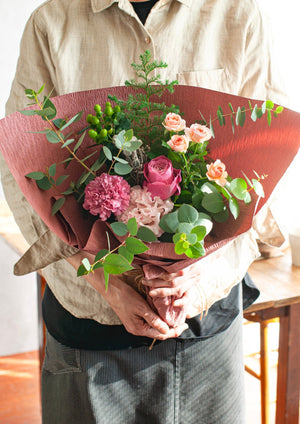
・Recommended Flowers: Red flowers that evoke passion and vitality are ideal. Red roses symbolize "passion" and "love," making them perfect for expressing gratitude. Red carnations symbolize "mother's love" and "gratitude," while dahlias symbolize "splendor" and "gratitude." A vibrant bouquet or flower arrangement incorporating these flowers is recommended.
66 Years Old: Rokuju
Derived from the kanji character "緑" (midori/green) which can be read as "六十" (roku-ju/sixty). It is one of the newer longevity celebrations, and green is believed to symbolize longevity and good health.
・Traditional Color: Green. This is a direct reflection of the character "Rokuju."
・Recommended Flowers: Green floral materials full of vitality and relaxing green plants are popular. Green carnations symbolize "healing" and "happiness," conveying wishes for physical and mental health. Potted plants are also a stylish option.
70 Years Old: Koki
Derived from the Chinese poet Du Fu's verse, "Life at seventy, rare since ancient times." It signifies celebrating a rare long life.
・Traditional Color: Purple. It is considered a noble color and has become established as a color of respect.
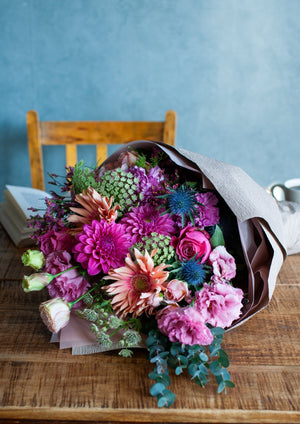
・Recommended Flowers: Elegant and subdued purple flowers are preferred. Purple Eustoma (Lisianthus) symbolizes "grace" and "hope," while purple gentian symbolizes "justice" and "sincerity," making them suitable for expressing respect. Wisteria-colored roses are also elegant and lovely.
77 Years Old: Kiju
Derived from the cursive form of the character "喜" (ki/joy), which can be read as "七十七" (nana-ju-nana/seventy-seven). It embodies the meaning of celebrating a long life filled with joy.
・Traditional Color: Generally considered to be purple.
・Recommended Flowers: Similar to Koki, purple flowers are recommended. In spring, lavender-colored sweet peas are recommended as they symbolize "gentle memories." Additionally, purple chrysanthemums symbolize "reminiscence." Brighter shades of purple are also vibrant and well-received.
80 Years Old: Sanju
Derived from the abbreviated form of the character "傘" (kasa/umbrella), which can be read as "八十" (hachi-ju/eighty). It celebrates the long life of eighty years.
・Traditional Color: Yellow or gold. These colors symbolize abundance and richness.
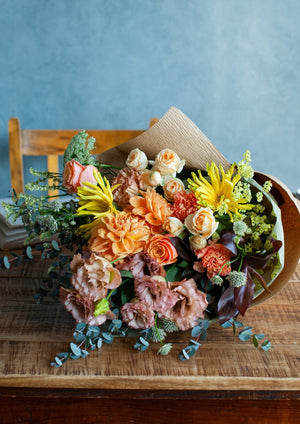
・Recommended Flowers: Bright and vibrant yellow flowers are well-received. Yellow roses symbolize "friendship" and "devotion," and yellow chrysanthemums are a symbol of longevity. Oncidium, with its vibrant yellow, is also popular.
81 Years Old: Hanju
This is a slightly rarer and more specialized celebration. It is derived from the character "半" (han/half), which can be broken down into "八十一" (hachi-ju-ichi/eighty-one).
・Traditional Color: Not specifically defined, but yellow or gold are often used, similar to Sanju and Beiju.
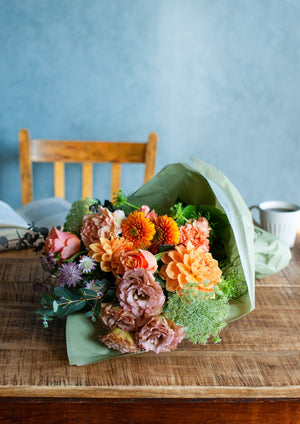
・Recommended Flowers: Bright flowers in yellow or orange hues, or flowers in the recipient's favorite colors would be good. Incorporating seasonal flowers is also a lovely idea.
88 Years Old: Beiju
Derived from breaking down the character "米" (kome/rice) into "八十八" (hachi-ju-hachi/eighty-eight). Rice is considered a symbol of abundance and fertility.
・Traditional Color: Yellow or gold are the traditional colors. They symbolize a bountiful harvest.
・Recommended Flowers: Yellow flowers, symbolizing abundance, are ideal. Yellow phalaenopsis orchids, with their flower language of "happiness flying in," are auspicious and make a noble gift if you wish to give a potted plant. Yellow roses and yellow gerberas symbolize "hope" and "progress," conveying wishes for a bright future.
90 Years Old: Sotsuju
Derived from the abbreviated form of the character "卒" (sotsu/end) (which is "卆"), which can be read as "九十" (kyu-ju/ninety).
・Traditional Color: Purple or white. These represent nobility and purity.
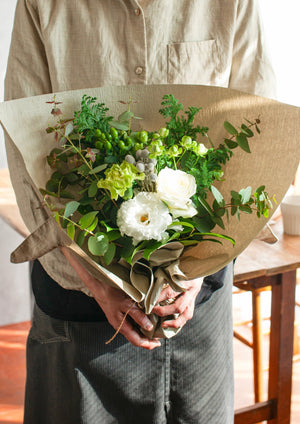
・Recommended Flowers: Purple orchids give a noble impression. White lilies symbolize "purity" and "dignity," and white Eustoma (Lisianthus) symbolizes "hope" and "grace." Pure white flowers are also favored.
99 Years Old: Hakuju
Derived from subtracting "one" from "hundred" to get "white" ("百" - "一" = "白"). It celebrates reaching a long life, just one step away from a hundred years.
・Traditional Color: White. It symbolizes purity, cleanliness, and longevity.
・Recommended Flowers: Pure white flowers are ideal. A pure white phalaenopsis orchid makes a superb celebratory gift. White roses symbolize "purity" and "respect," and white baby's breath symbolizes "gratitude" and "happiness," expressing thanks and wishes for longevity.
100 Years Old: Hyakuju (Momoju) / Kiju
Called "Hyakuju" because it is one hundred years old. "Kiju" signifies having lived for a century (one hundred years), a very auspicious celebration of rare longevity.
・Traditional Color: White or pink. These express purity, vitality, and happiness.
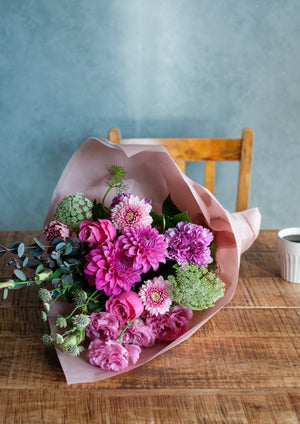
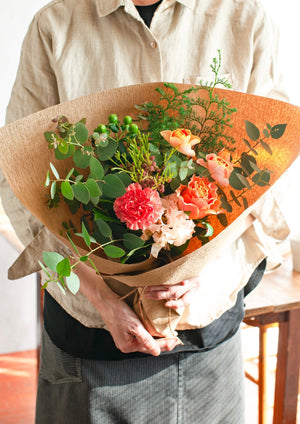
・Recommended Flowers: Elaborate and noble flowers are suitable to commemorate the great achievement of reaching one hundred years old. Luxurious white or pink phalaenopsis orchids, pure white Casablanca lilies, and if it's early summer, vibrant pink peonies are recommended.
108 Years Old: Chaju
Derived from breaking down the character "茶" (cha/tea) into "十, 十, 八十八" which together add up to "百八" (hyaku-hachi/one hundred eight).
・Traditional Color: Not specifically defined, but following Hyakuju, white or pink, or green to evoke longevity, would be good.
・Recommended Flowers: It is recommended to choose seasonal flowers or respect the recipient's preferences, combining warm-colored flowers or vibrant green floral materials.
111 Years Old: Koju
Derived from breaking down the upper part of the character "皇" (ko/emperor) into "白 (ninety-nine)" and "一, 一, 一" which together add up to "百十一" (hyaku-ju-ichi/one hundred eleven).
・Traditional Color: Not specifically defined, but bright colors such as white or pink are considered good.
・Recommended Flowers: As this is a celebration of extremely rare longevity, luxurious orchid flowers or custom-made flower arrangements with a special feel would be suitable.
95, 110, 112 Years Old: Chinju
Chinju celebrates rare longevity, and depending on the region and custom, 95, 110, and 112 years old may be referred to as Chinju.
・Traditional Color: Not specifically defined. If giving flowers, yellow, which expresses celebratory feelings, would be a good choice.
・Recommended Flowers: To express wishes for the recipient's health and happiness, bright-colored flowers or flowers they like, conveying years of gratitude, would be good.
120 Years Old: Daikanreki
A celebration of reaching an exceptional longevity, marking a second Kanreki.
・Traditional Color: Similar to Kanreki, red is the traditional color.
・Recommended Flowers: Similar to Kanreki, a gorgeous and splendid bouquet or arrangement based on red is fitting. Present it with the utmost respect and wishes.
Longevity Celebration Quick Guide
| Age (Full Age) | Longevity Celebration | Traditional Color |
| 60 | Kanreki | Red |
| 66 | Rokuju | Green |
| 70 | Koki | Purple |
| 77 | Kiju | Purple |
| 80 | Sanju | Yellow/Gold |
| 81 | Hanju | None in particular |
| 88 | Beiju | Yellow/Gold |
| 90 | Sotsuju | Purple/White |
| 95 | Chinju | None in particular |
| 99 | Hakuju | White |
| 100 | Hyakuju (Momoju)/Kiju | White/Pink |
| 108 | Chaju | None in particular |
| 110 | Chinju | None in particular |
| 111 | Koju | None in particular |
| 112 | Chinju | None in particular |
| 120 | Daikanreki | Red |
At &YOUKAEN, we offer a wide selection of flower gifts tailored to the traditional colors and flower meanings of these longevity celebrations.
You can find the perfect flowers to adorn life's momentous occasions, such as red for Kanreki, purple for Koki and Kiju, and yellow for Beiju, so please browse our product list.
Our experienced florists are also available to provide personalized suggestions to meet your preferences, so please feel free to contact us with any inquiries.
How to Celebrate Longevity?

For longevity celebrations, it's essential to celebrate with heartfelt sincerity, without getting too caught up in formalities.
Host a Family Dinner
A classic way to celebrate longevity is for family and relatives to gather for a meal.
You could reserve a private room at a traditional Japanese restaurant or a hotel, or prepare a homemade meal at home.
Sharing a meal, perhaps traditional Japanese cuisine or the honoree's favorite dishes, while reminiscing, can be the most cherished gift.
If there's a commemorative photo, having a bouquet will make it look extra special and create a lifelong memory.
Choose Auspicious Gifts
For longevity celebrations, in addition to practical items or hobby-related gifts, auspicious items are often preferred.
Items matching the celebratory color (clothing, accessories, tableware, etc.) are frequently chosen for their special feel.
Items for health (massage devices, health foods, bath salts, etc.) would also be appreciated.
And above all, flower gifts that convey "gratitude and wishes for longevity" enrich the heart and adorn the celebratory occasion beautifully. Even when flowers wilt, they leave a lasting impression and memory.
Taboos for Longevity Celebrations
While longevity celebrations are joyous occasions, there are a few taboos to avoid to ensure the recipient does not feel uncomfortable.
・Items that evoke "old age": It is generally best to avoid gifts that directly highlight old age, such as reading glasses, hearing aids, or canes. However, if the recipient needs such an item regularly and expresses a wish for it, it is fine to give it after confirming with them directly.
・Items that evoke "suffering" or "death": It is generally avoided to give combs (kushi) which can sound like "ku" (suffering), or cyclamen, which is sometimes associated with "shi" (death), due to wordplay.
・Flowers used for condolences: Flowers used for funerals or offerings (certain varieties of chrysanthemums, white carnations, etc.) are not suitable for a bright celebratory occasion. Consult with a florist to choose flowers appropriate for the celebration.
Summary

From Kanreki to Daikanreki, Japan has a rich culture of longevity celebrations marking life's milestones.
By understanding the meaning and traditional color associated with each age, you can express your celebratory feelings more deeply and memorably.
&YOUKAEN offers a wide selection of high-quality flower gifts for various longevity celebration occasions.
We provide diverse options such as vibrant bouquets and flower arrangements in traditional colors like red for Kanreki, purple for Koki and Kiju, and yellow for Beiju, as well as long-lasting preserved flowers.
We also accept custom orders and deliver to a wide range of regions across Japan, so you can send gifts to family members living far away with peace of mind.
Please use this "Age-Based Celebration Guide" to find heartwarming flowers that express gratitude and wishes for longevity to your loved ones.
&YOUKAEN's expert florists will help you bring your feelings to life.
Jul 23, 2025