How do you make flower arrangements last longer?

Tips for making flower arrangements last longer
Have you ever received a flower arrangement as a gift for a birthday or retirement celebration?
While such a lovely gift can bring great joy, many people also feel unsure about "how to care for it."
To address these concerns, an &YOUKAEN florist will explain daily flower arrangement care methods they practice.
If you follow the advice in this article, your arrangement will last much longer than if left unattended!
Please give it a try!
What exactly is a flower arrangement?

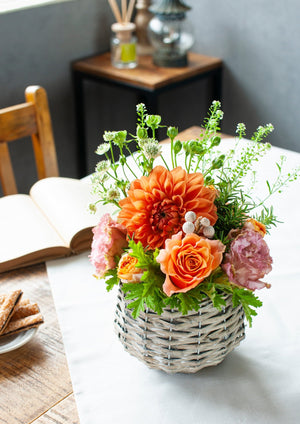
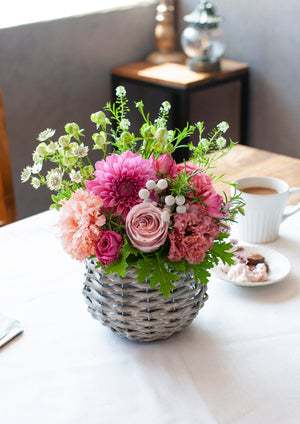
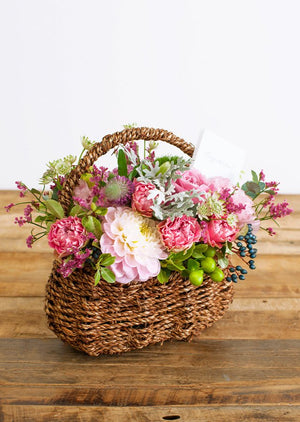
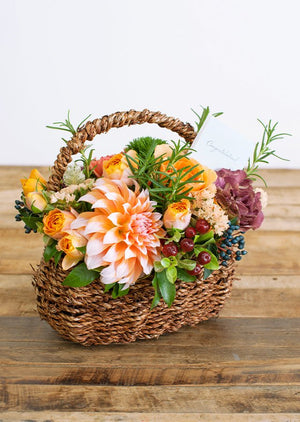
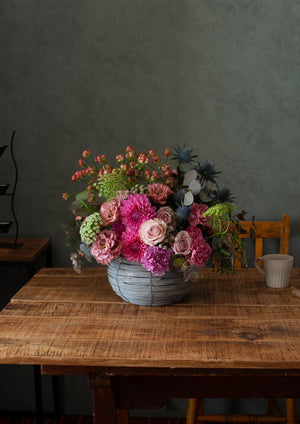
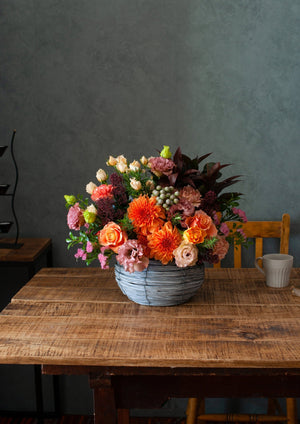
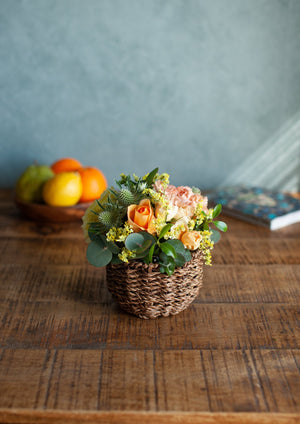
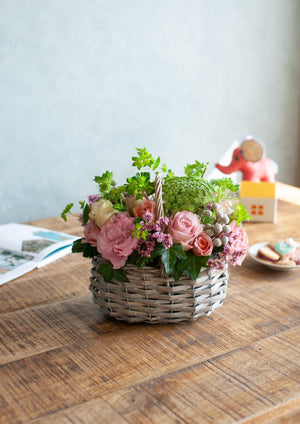
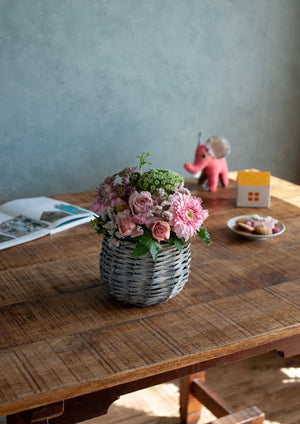
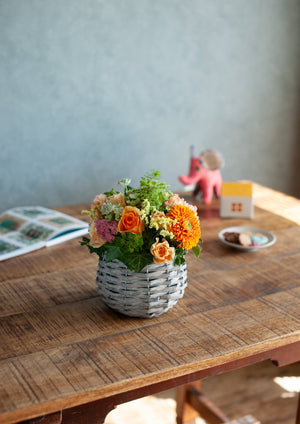
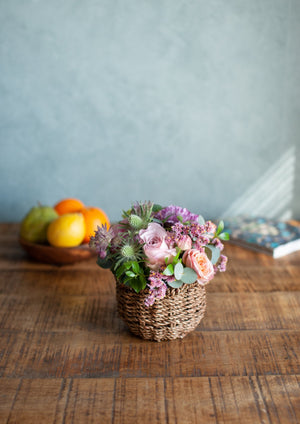
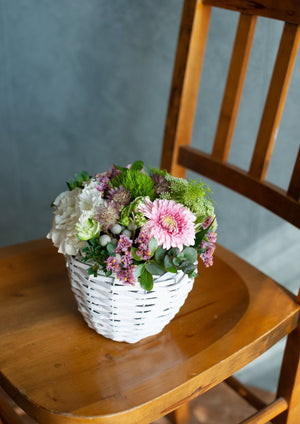
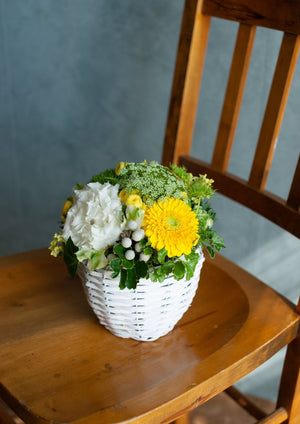
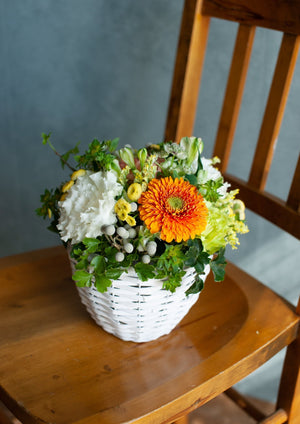
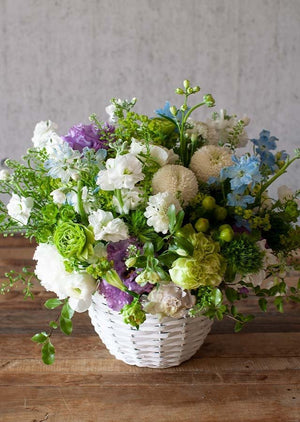
A flower arrangement is a decorative item or interior decoration made by inserting flowers into a water-absorbing sponge.
People often ask, "How is it different from ikebana?" While ikebana emphasizes Japanese beauty like "wabi-sabi" and "space/emptiness,"
flower arrangements heavily use flowers to focus on Western beauty, emphasizing "opulence."
Unlike bouquets, flower arrangements do not need to be transferred to a vase, so they are often given as gifts to people whose vase ownership is unknown.
It is a popular flower gift, second only to bouquets, and is recommended for celebratory occasions.
■Types of arrangements that require water

Flower arrangements are basically made using fresh flowers.
The water-absorbing sponge contains plenty of water, allowing the flowers to absorb it.
However, flower arrangements that do not use fresh flowers do not need watering.
If you receive a flower arrangement made with dried flowers, preserved flowers, or artificial flowers, manage them without adding water.
■First things to do after receiving a flower arrangement

If you receive a flower arrangement for a celebration such as a birthday, anniversary, or farewell party, first take it home carefully to avoid damaging the flowers.
Once you arrive home, carefully remove the wrapping.
If the wrapping is left on, moisture can get trapped inside the film, causing the flowers to steam and potentially weaken.
■Basic care for flower arrangements

Daily care for flower arrangements involves "watering them" and "removing damaged flowers and leaves."
By paying attention to these two points, the beauty of the arrangement on the day you received it will last longer.
Since flower arrangements use fresh flowers, the flowers arrive in your hands in a living state.
Once cut, flowers do not need sunlight or nutrients, but remember that they do need water.
■How many days do flower arrangements last?

From the day you receive it, a flower arrangement can generally maintain its beautiful condition for about 2 days without any special care.
However, depending on the temperature and humidity, deterioration may occur more quickly.
During hot summer periods, it might weaken in just one day, while in cold winter periods, it could last around 5 days.
If you follow the care methods explained from now on, it can last about a week, so please give them a try!
Watering flower arrangements

The flowers used in flower arrangements are living flowers.
Just as flowers in a garden need water, flower arrangements also need water.
If you neglect to water them, the water in the water-absorbing sponge will dry up, and the flowers will wilt quickly.
When you receive a flower arrangement, make sure to water it daily.
■ Check if the water-absorbing sponge is dry!

When checking if a flower arrangement needs water, it's a good idea to touch the water-absorbing sponge at the base of the flowers with your finger.
If moisture seeps out when you gently press it, it's well-hydrated.
Conversely, if it feels a bit dry or no moisture seeps out when you gently press it, add more water.
The water-absorbing sponge has a property where it stops absorbing water once it dries out, so try to keep it moist.
■ Be careful not to overwater!

If you add too much water to the water-absorbing sponge, water will overflow from the cellophane covering the sponge.
If water accumulates in the vessel containing the flower arrangement, it can cause the flowers to steam and weaken.
If a basket-style vessel is used, water may leak out and stain your floor or furniture.
When adding water, do so carefully to avoid leaks, rather than pouring it in all at once.
■ It's also effective to mist with a spray bottle for proper hydration!

Flowers prefer moderate humidity. For example, if flowers dry out due to air conditioning or heating, their petals will wilt and weaken.
Before that happens, it's a good idea to mist the entire flower arrangement with 2-3 sprays from a spray bottle.
When the air is too dry, giving water directly to the flowers will make the entire flower arrangement vibrant again.
However, overdoing it is not recommended, so be careful not to mist the flowers until they are dripping wet. This can cause them to steam and rot!
Observe your flowers carefully and remove any damaged ones

If you observe your flower arrangement closely, you may find damaged flowers.
"Damaged flowers" refer to petals that have discolored or leaves that have withered. In some cases, petals or leaves may have dissolved.
Such flowers release "ethylene gas," which affects surrounding flowers and causes the entire flower arrangement to deteriorate rapidly.
It is crucial to remove damaged flowers immediately when you find them.
■ Beware of moldy flowers!

During the summer months of June to August, especially when it's humid, mold can grow on flowers and water-absorbing sponges.
If left untreated, the mold will spread to other flowers, so remove it as soon as you find it.
If the water-absorbing sponge is also moldy, remove all the flowers, lightly wash their stems, and reinsert them into a vase.
Mold is a natural enemy of flowers. It's best to deal with it before it ruins the entire flower arrangement.
■ It's better to remove flowers that aren't vibrant.

When flower arrangements are displayed for a long time, some flowers inevitably lose their vitality, drooping or having withered petals.
It's best to remove such flowers as soon as you notice them. Leaving lifeless flowers can cause them to rot, affecting other flowers.
In the worst case, bacteria can multiply, causing the water in the water-absorbing sponge to rot, which then emits a foul odor.
We encourage you to observe your flower arrangement closely from time to time after you display it.
If you can enjoy the changing atmosphere day by day and also check for any weakening flowers, your flower arrangement will last longer.
Location for flower arrangements to last longer

The lifespan of a flower arrangement can also vary depending on where it's placed.
Make sure to display it in a location where the flowers can thrive comfortably.
Just by considering the placement, you can extend the arrangement's life by 1 to 3 days.
■ Avoid direct sunlight!

Flowers dislike direct sunlight. Sunlight dries out petals and weakens flowers.
Also, the warmth of the sun can heat up the water-absorbing sponge, making the warmed water not only weaken the flowers but also create an environment where bacteria can easily multiply.
Once cut, flowers do not need much sunlight, so manage your flower arrangement by placing it in a shaded area away from direct sunlight.
It is also not good to display it in a room where heat tends to accumulate.
■ Flowers deteriorate faster in humid places!

Flowers dislike dryness, but conversely, they also dislike excessively humid places.
For example, restrooms and toilets are high-risk areas. The high moisture in the air causes flowers to steam and rot quickly.
Areas like the kitchen or sink are generally fine, but avoid displaying flowers in small, humid spaces.
■ Avoid placing where air conditioner wind blows!

"I always kill flowers, so it's a shame to receive them," say people who make this common mistake (the No. 1 cause of killing flowers)!
Cooling air dries out flowers, while heating air warms them, causing them to weaken quickly.
When displaying a flower arrangement, be mindful of air conditioner airflow. This alone will significantly extend its life.
Also, be cautious of places affected by heat emission, such as next to a TV or computer.
Further methods to make flower arrangements last longer

If you pay attention to the above points, a flower arrangement that usually lasts about 3 days can last almost a week.
However, if you want your flower arrangement to last even longer, there are also the following methods.
■ Use flower food

When watering daily, adding flower food to the water can suppress bacterial growth in the absorbent sponge, helping the flower arrangement last longer.
Flower food is sold at florists and often included when you purchase a flower arrangement, so please give it a try.
If you don't have flower food, bleach can be used as a substitute. Dissolve just a tiny bit in water and let the flowers absorb it to prevent bacterial growth.
If using bleach, be careful not to get it on the petals!
What to do when the flowers in your arrangement become sparse?

Through daily maintenance, you'll find some flowers that have lost their vitality and must be discarded, and others that are still vibrant even after a week.
At this point, the arrangement might lose the lushness it had when you first received it and feel a bit sparse.
In such cases, trying the following methods is recommended. Please use them as a reference.
■ Buy flowers from a florist and add them

If your flower arrangement has become sparse, you can also buy cut flowers from a florist and add them to it.
You can choose flowers while envisioning the original design you received, or even create your own unique design.
When inserting new flowers into the water-absorbing sponge, the trick to making them last longer is to insert them into a spot where there isn't already a hole.
Also, try to insert them fairly deep.
■ Gather only the vibrant flowers and display them in a vase

If you have a vase at home, it's also lovely to gather only the vibrant flowers from the arrangement and re-arrange them in a vase.
Even a single or two stems can look beautiful, allowing you to enjoy a different charm than the full arrangement.
When re-arranging in a vase, it's best to cut the portion that was inserted into the water-absorbing sponge before placing them in water.
This is called "re-cutting," a technique to improve water absorption by providing a fresh cut to the damaged stem.
■ Enjoy them as dried flowers

If you don't have a vase at home, it's also lovely to dry the vibrant flowers.
For example, roses, baby's breath, hydrangeas, and leafy greens like eucalyptus are easy to dry.
To make dried flowers, simply tie the intact flowers with a string and hang them in a well-ventilated area. After about two weeks, they will transform into beautiful dried flowers.
However, delicate-petaled flowers like dahlias and gerberas are often difficult to dry beautifully, so caution is needed.
&YOUKAEN's Recommended Flower Arrangements

&YOUKAEN offers flower arrangements perfect for birthday gifts, wedding anniversaries, and farewell/welcome presents.
Our unique designs and delicate flowers are unlike those found at other florists, making them truly special.
Please consider gifting an &YOUKAEN flower arrangement to your loved ones.
Nov 12, 2024