What is Choyo no Sekku? A detailed explanation of its origins and history.

What is Choyo no Sekku? A Detailed Explanation of its Origins and History
September 9th, a day that signals the deepening of autumn.
Are you aware that this day is called "Choyo no Sekku" or "Chrysanthemum Festival"?
It is a beautiful, long-standing Japanese custom to decorate with chrysanthemums and drink chrysanthemum sake to pray for longevity.
However, some of you may not be as familiar with it as with other seasonal festivals.
In this article, we will provide a detailed explanation of the origins and history of Choyo no Sekku, how it is celebrated today, and the charm of chrysanthemums as a symbol of longevity, from a florist's perspective.
By learning about Choyo no Sekku now, why not enrich your autumn life even further?
Click here for our seasonal branch and flower collection! ▶︎
What is Choyo no Sekku?

First, let's look at the basic meaning of Choyo no Sekku and what kind of event it is.
What is Choyo no Sekku?
Choyo no Sekku is a seasonal festival that falls on the 9th day of the 9th month of the lunar calendar.
It is the last of the five seasonal festivals, and as it is the time when chrysanthemums are in full bloom, it is also known as the "Chrysanthemum Festival".
This day is considered a day to pray for longevity and good health, and people celebrate the arrival of autumn by decorating with chrysanthemums and drinking chrysanthemum sake.
What is its position among the Five Seasonal Festivals?
The Five Seasonal Festivals are events held to celebrate seasonal turning points and ward off evil spirits, comprising JinJitsu (January 7th), Joshi (March 3rd), Tango (May 5th), Tanabata (July 7th), and Choyo (September 9th).
Choyo no Sekku is the only one of these five festivals that is not a national holiday.
However, it was considered the most auspicious day because the largest odd number, "nine," which is said to be lucky, appears twice.
What is the origin of the name?
The name Choyo no Sekku originates from the ancient Chinese philosophy of "Yin-Yang thought."
・In Yin-Yang thought, odd numbers were considered "yang" numbers, and even numbers were considered "yin" numbers.
・Since this day marks the overlapping of the largest yang number, "nine," it came to be called "Choyo" (Double Yang).
The reason it is called the "Chrysanthemum Festival" is not only because chrysanthemums are in full bloom during this season, but also because they were believed to have the power to ward off evil spirits and were a symbol of longevity.
A Custom Brought from Ancient China
The origin of Choyo no Sekku is said to lie in the ancient Chinese folk belief of wishing for eternal youth and longevity.
This custom was introduced to Japan and developed by integrating with Japan's unique culture.
Let's explain this in more detail in the next chapter.
Historical Background of Choyo no Sekku

Choyo no Sekku originated in ancient China, was transmitted to Japan over time, and evolved through integration with unique Japanese culture.
By delving into its history, we can understand why this day has been cherished.
The Origin of Choyo no Sekku: Ancient Chinese Folk Belief

The origin of Choyo no Sekku dates back to before the common era and is said to be rooted in the ancient Chinese folk belief of wishing for eternal youth and longevity.
In Chinese Yin-Yang philosophy, September 9th was considered an extremely auspicious day because it was the day when the largest Yang number, "nine," appeared twice.
However, there was also a belief that when Yang reaches its peak, it turns into Yin, leading to a custom of fearing misfortune on this day.
Therefore, people decorated with chrysanthemums and climbed to high places to ward off evil and pray for longevity and good health.
Chrysanthemums have long been regarded as sacred flowers with the power to dispel evil, and people sought to benefit from their efficacy.
Introduced to Japan in the Nara period, it flourished in the Heian imperial court.

Choyo no Sekku is believed to have been introduced to Japan by Japanese envoys to Tang China during the Nara period.
At that time, Japan actively adopted Chinese culture, and the Gosekku (Five Seasonal Festivals) were among them.
In particular, during the Heian period, Choyo no Sekku became a grand event at the imperial court.
Aristocrats held "Kankiku-no-en" (chrysanthemum viewing parties) in gardens where chrysanthemums bloomed, composing poetry and admiring the flowers.
At these parties, they enjoyed the beauty of chrysanthemums while praying for longevity.
Also born during this period was the elegant custom of "Kiku no Kisewata" (chrysanthemum covered with cotton).
On the evening of September 8th, court ladies would cover chrysanthemum blossoms with raw cotton, allowing them to absorb the night dew.
The next morning, it was believed that by purifying one's body with the cotton that had absorbed the chrysanthemum's fragrance and dew, one could maintain youth and longevity.
This custom illustrates the elegant lifestyle of the aristocrats of that time.
Gained Popularity Among Commoners in the Edo Period

Choyo no Sekku became widely popular among commoners during the Edo period.
During the era of the fifth shogun, Tokugawa Tsunayoshi, the five seasonal festivals were officially designated as public holidays.
As a result, Choyo no Sekku became an important event even among commoners, and the custom of decorating with chrysanthemums and drinking chrysanthemum sake to pray for longevity and good health became established.
During this period, it also came to be called "Kuri no Sekku" (Chestnut Festival) because it coincided with the chestnut harvest season.
People gathered with their families to enjoy chestnut rice and other dishes made with chestnuts, expressing gratitude for the rich autumn harvest.
Among samurai families, there was also a custom of cultivating a martial spirit by using chrysanthemum decorations and family crests featuring chrysanthemum designs, in connection with the imperial crest.
"Chrysanthemum Culture" Carried into the Modern Era

With the adoption of the Gregorian calendar in the Meiji era, Choyo no Sekku gradually became less familiar compared to other seasonal festivals.
However, its fundamental meaning of wishing for longevity and good health has been passed down to the present day.
Chrysanthemums continue to maintain their cultural value as a symbol of Japan, being used as the imperial crest.
Even today, chrysanthemum festivals and exhibitions are held nationwide, where people enjoy various types of chrysanthemums.
While Choyo no Sekku may be a fading tradition, the culture of admiring chrysanthemums still lives on in our daily lives.
Traditional Events Related to Choyo no Sekku

There are several traditional events associated with Choyo no Sekku. By understanding their background, you can enjoy them more deeply. Please try to imitate them.
A custom of drinking chrysanthemum sake!
"Chrysanthemum sake" is a custom of drinking sake infused with chrysanthemum flowers.
It was believed that by drinking chrysanthemum sake, which had absorbed the fragrance of chrysanthemums, one could ward off evil spirits and attain eternal youth and longevity.
However, modern ornamental chrysanthemums are not edible, so please use specialized edible chrysanthemums or limit yourself to enjoying the fragrance.
Enjoy Chestnuts and Autumn Delicacies!
Since Choyo no Sekku coincides with the chestnut season, it is also called the "Chestnut Festival".
For dinner on Choyo no Sekku, there is a custom of enjoying dishes made with chestnuts, such as chestnut rice and kuri kinton (sweetened mashed chestnuts).
This is a uniquely Japanese custom, tied to gratitude for the autumn harvest.
Festivals and Events Held on Choyo no Sekku
Across the country, chrysanthemum festivals (such as Kiku Matsuri) are held in conjunction with Choyo no Sekku.
Also, the Imperial Family still carries out traditional ceremonies such as Kikuka no Kisewata (Chrysanthemum Cotton Covering), demonstrating that its history is still alive today.
Myths and Legends Associated with Choyo no Sekku

Chrysanthemums, an essential part of Choyo no Sekku, are not merely beautiful flowers.
Behind them lies a deep connection to the Taoist belief in immortality and mythology transmitted from ancient China.
Here, we introduce the mystical stories of why chrysanthemums have been considered a symbol of longevity.
Chrysanthemums, Hermits, and the Elixir of Immortality

When discussing the relationship between Choyo no Sekku and chrysanthemums, the teachings of Taoism from the Tang dynasty are indispensable.
Taoism is a Chinese folk belief that pursues immortality and happiness in this life, and chrysanthemums were strongly associated with this philosophy.
People believed in legends that hermits maintained their longevity by drinking dew from chrysanthemums.
One famous legend tells the following story:
『Once upon a time, in a mountain called Shuyu in Henan Province, there lived a hermit. The hermit collected and drank the night dew that had gathered on the wild chrysanthemums in the mountains, and eventually attained an immortal body. Chrysanthemums grew in abundance at the foot of the mountain where the hermit lived, and their dew flowed into a river. It is said that the villagers who drank the water from this river also lived long lives』
From this legend, it became believed that "chrysanthemums have the power to ward off evil and grant immortality."
Thus, the custom of bathing in chrysanthemum dew and drinking sake infused with chrysanthemums on Choyo no Sekku was born.
Chrysanthemums and Longevity Praised in Chinese Poetry

The chrysanthemum plays an important role in Choyo no Sekku not only as a symbol of eternal youth and longevity, but also as a flower that represents nobility and isolated beauty.
The Tang dynasty poet, Tao Yuanming, was known for his love of chrysanthemums, and they frequently appear in his poetry.
"I pluck chrysanthemums by the eastern fence, and gaze leisurely at the southern mountains."
This famous line expresses a life of ease and freedom from worldly concerns, in harmony with nature.
In this way, the chrysanthemum, linked with Taoist philosophy, was also seen as a symbol of a pure spirit, liberated from worldly desires.
Immortality meant not just the continuation of physical life, but also the preservation of spiritual purity.
The Power of "Nine" Imbued in Choyo no Sekku

The fact that Choyo no Sekku falls on September 9th is also deeply connected to myths and legends.
In ancient Chinese Yin-Yang philosophy, odd numbers were considered "yang" numbers, and even numbers were considered "yin" numbers, but there was a belief that when yang numbers reached their peak, they would revert to yin.
Nine is the largest yang number, and the day of Choyo, where it appears twice, was considered both the most auspicious and the most unstable day.
Therefore, on this day, people would climb to high places, wear 茱萸 (shuyu) which was believed to have the power to ward off evil spirits, and drink chrysanthemum sake to avoid misfortune.
Furthermore, this day was regarded as a special day when the spirits of chrysanthemums bloomed, and by decorating with chrysanthemums and performing rituals related to them, people sought to receive their strong vitality and power to ward off evil.
These myths and legends resonate with us today as stories that allow us to appreciate Choyo no Sekku more deeply.
Adorning chrysanthemums is not merely an act of appreciation, but also a way to connect with the ancient people's wishes for longevity and good health, and their yearning for a pure spirit.
How to Celebrate Choyo no Sekku in Modern Times

Here's how to enjoy traditional customs in a modern lifestyle.
Let's pray for good health with family
By rediscovering Choyo no Sekku, why not make September 9th a day for families to gather and wish for each other's health and longevity?
Especially if you have elderly family members, it can be a good opportunity to celebrate their longevity, coinciding with Respect for the Aged Day (the third Monday of September).
Let's eat "Kuri Gohan" for dinner
Enjoying seasonal flavors is also a great way to experience the festival. Let's gather around a dinner of chestnut rice and feel the arrival of autumn.
Eating autumn eggplant is also Good!
The Choyo no Sekku season is also when autumn eggplants are delicious.
The proverb "Don't let your wife eat autumn eggplants" has two meanings: that they are so delicious you don't want to share them with your wife, and that they cool the body, so you shouldn't let your wife eat them.
Enjoying seasonal eggplants is also a great way to feel the autumn atmosphere.
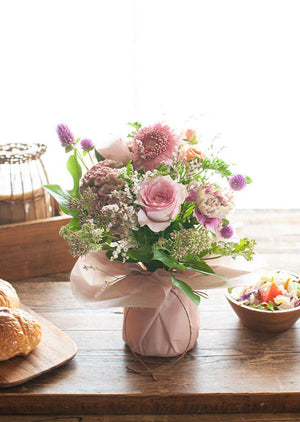
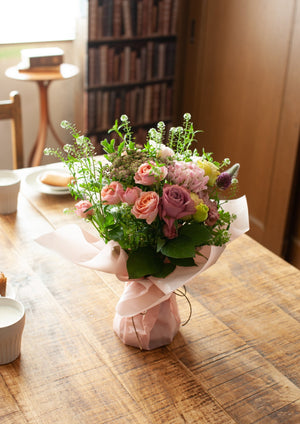
Decorate with flower arrangements and bouquets featuring chrysanthemums!

Decorating with chrysanthemums, the symbol of Choyo no Sekku, is the easiest and most beautiful way to celebrate.
Today, there is an abundance of Western chrysanthemums, such as the cute, round "mums" and the spray-type "spray mums."
By combining traditional Japanese chrysanthemums with Western chrysanthemums, you can also enjoy modern arrangements.
Why not savor the joy of decorating with flowers while considering the chrysanthemum's meanings such as "nobility" and "longevity"?
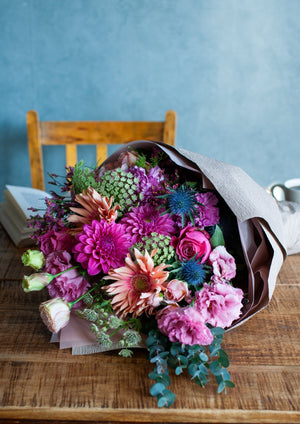
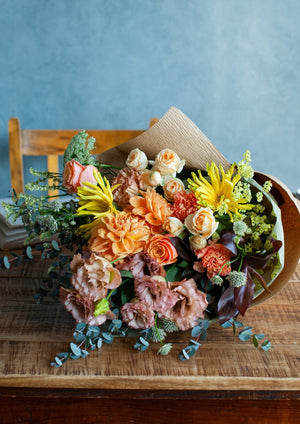
Recommended bouquets for Choyo no Sekku (also recommended for Respect for the Aged Day!)

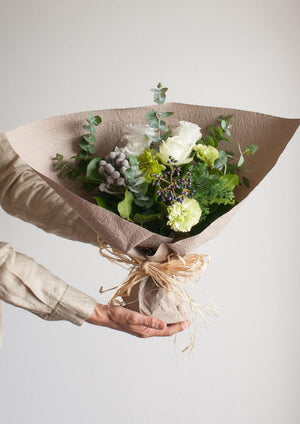
Western-style Special Bouquet with Autumn Flowers "Autumn Adornment"
¥15,950-
Decorate with flower arrangements and bouquets using chrysanthemums!

At &YOUKAEN, we offer a wide selection of chrysanthemums perfect for Choyo no Sekku.
We have a diverse range of varieties, from traditional Japanese chrysanthemums to pop and modern Western chrysanthemums (mums, spray mums).
Arrangements and bouquets centered around chrysanthemums are not only suitable as home decorations but also as gifts to wish for longevity for elderly parents or those you are indebted to.
We also offer gifts that can be presented on Respect for the Aged Day, so please consider them.
Recommended flower arrangements for Choyo no Sekku (also recommended for Respect for the Aged Day!)

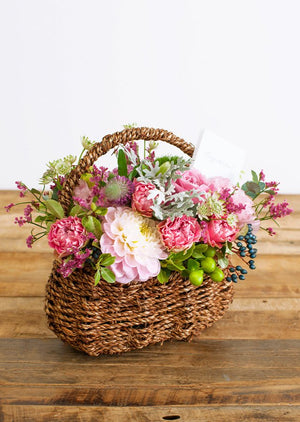
Japanese-style Flower Arrangement S "Kaki"
¥6,050-
Summary

Choyo no Sekku may not be widely known, but it is an important traditional Japanese culture that wishes for longevity and good health.
By decorating with chrysanthemums and enjoying chestnuts and other autumn flavors, you can spend a rich and meaningful time.
At &YOUKAEN, we offer high-quality chrysanthemums and various other flowers that celebrate the autumn season, so that everyone can enjoy Choyo no Sekku.
Our professional florists will be delighted to assist you in choosing your flowers.
Aug 04, 2025