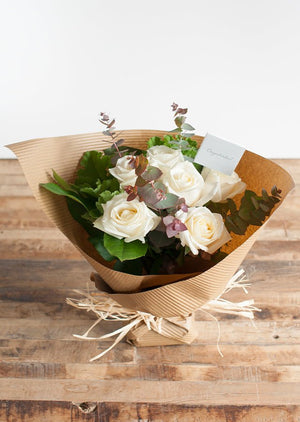
December Birth Flowers: A List of Birthday Flowers and Their Meanings

A birth flower is a specific flower and its associated flower language (hanakotoba) assigned to each day of the year.
For the birthdays of your loved ones, it's wonderful to give a bouquet or flower arrangement featuring their birth flower, or flowers related to its language or color.
■ December 1st Birth Flower: "Chrysanthemum"

| Plant Name | Chrysanthemum |
| Scientific Name | Chrysanthemum × morifolium Ramat. |
| Family | Asteraceae |
| Genus | Chrysanthemum |
| Origin | China |
| Blooming Season | October - November |
Chrysanthemums are flowers that have been loved by Japanese people since ancient times and were once believed to be a medicine for eternal youth and longevity.
The flower language of chrysanthemums is "nobility," "exaltation," and "integrity."
These dignified flower meanings are why they are used in the emblem of the Japanese Imperial Family.
The flower language varies by color: red chrysanthemums mean "love," pink chrysanthemums mean "sweet dreams," white chrysanthemums mean "admiration," yellow chrysanthemums mean "longevity and happiness," and purple chrysanthemums mean "dreams come true."
More about chrysanthemums here ▶︎
&YOUKAEN is selling flower arrangements using chrysanthemums!

Arrangement for a Fresh New Year "Zuiko"
¥9,900-
■ December 2nd Birth Flower: "Cineraria"

| Plant Name | Cineraria |
| Scientific Name | Pericallis × hybridus |
| Family | Asteraceae |
| Genus | Pericallis |
| Origin | |
| Blooming Season | November - May |
Cineraria is a plant highly valued by gardening enthusiasts as it blooms from winter. It is also known as Senecio.
The flower language of cineraria is "cheerfulness," "joy," and "delight."
These flower meanings originate from its characteristic of blooming vibrantly even in winter.
Cineraria also has different flower meanings depending on its color: white cineraria means "hopeful worries," purple cineraria means "joy in sorrow," blue cineraria means "love's troubles," and pink cineraria means "bright smile."
In addition, "Heliconia" and "Carnation" are also birth flowers for December 2nd.
Heliconia's flower language is "eccentric," "attention," and "unique individuality," while
Carnation's flower language is "woman's love," "sensation," "emotion," and "pure love."
■ December 3rd Birth Flower: "Lavender"

| Plant Name | Lavender |
| Scientific Name | Lavandula |
| Family | Lamiaceae |
| Genus | Lavender |
| Origin | Mediterranean coast |
| Blooming Season | April - July |
Lavender, a very popular herb used in potpourri. It strongly evokes images of Furano.
The flower language of lavender is "I am waiting for you" and "silence."
"Silence" was given as a flower meaning because the scent of lavender calms the mind.
Furthermore, the flower language varies by lavender type: English lavender means "happiness," and French lavender means "expectation."
In addition, "Stock" and "Rose" are also birth flowers for December 3rd.
Stock's flower language is "eternal beauty," "bond of affection," "courtship," and "future to look forward to," while
Rose's flower language is "beauty" and "love."
■ December 4th Birth Flower: "Abelia"

| Plant Name | Abelia |
| Scientific Name | Abelia × grandiflora |
| Family | Caprifoliaceae |
| Genus | Abelia |
| Origin | Horticultural variety |
| Blooming Season | Mid-May - October |
Abelia is a plant that blooms small white flowers and is characterized by its strong resistance to disease.
The flower language of Abelia is "humility," "modesty," and "good fortune."
The flower meanings "humility" and "modesty" come from its characteristic of bearing small flowers.
The flower meaning "good fortune" is attributed to Abelia's trait of being strong against diseases and pests.
In addition, "Sasanqua" and "Flowering Kale" are also birth flowers for December 4th.
Sasanqua's flower language is "single-minded love," "devotion," "ideal love," and "overcoming difficulties," and
Flowering Kale's flower language is "blessing," "enveloping love," "compassion," "unwavering resolve," and "profit."
■ December 5th Birth Flower: "Tsuwabuki (Farfugium japonicum)"

| Plant Name | Tsuwabuki (Farfugium japonicum) |
| Scientific Name | Farfugium japonicum |
| Family | Asteraceae |
| Genus | Farfugium |
| Origin | Japan |
| Blooming Season | October - December |
Tsuwabuki is a plant that blooms in the cold winter season, producing small yellow flowers similar to chrysanthemums.
The flower language of Tsuwabuki is "unyielding to hardship," "humility," "modesty," "love, be revived," and "unyielding to hardship."
The flower meanings "humility," "modesty," and "unyielding to hardship" come from Tsuwabuki's characteristic of being strong in shade and growing robustly.
Additionally, "love, be revived" was chosen based on the image of it blooming beautiful yellow flowers even in dimly lit places.
In addition, "Nanten" and "Cymbidium" are also birth flowers for December 5th.
Nanten's flower language is "my love grows ever stronger," "good family," and "bringing good fortune," while
Cymbidium's flower language is "glamorous love," "noble beauty," "sincere affection," and "simplicity."
■ December 6th Birth Flower: "Holly"

| Plant Name | Holly |
| Scientific Name | Ilex aquifolium |
| Family | Aquifoliaceae |
| Genus | Ilex |
| Origin | West Asia, Southern Europe, North Africa |
| Blooming Season | April - May |
This plant is used for New Year's decorations and Setsubun decorations, and in other countries, it is sometimes used as a Christmas decoration.
The flower language of holly is "prudence," "I will protect you," "protection," "fortitude," "foresight," and "welcome."
"Prudence," "I will protect you," and "protection" are derived from the painful thorns on holly leaves.
In both Japan and abroad, holly has been used as a tree to ward off evil.
In addition, "Sweet Alyssum," "King Protea," and "Strelitzia" are also birth flowers for December 6th.
Sweet Alyssum's flower language is "grace" and "value surpassing beauty," while
King Protea's flower language is "free and unfettered," "glamorous expectation," "royal dignity," and "sweet love."
Strelitzia's flower language is "brilliant future," "to acquire all," "affected love," "love's dandy," and "tolerance."
■ December 7th Birth Flower: "Lachenalia"

| Plant Name | Lachenalia |
| Scientific Name | Lachenalia |
| Family | Asparagaceae |
| Genus | Lachenalia |
| Origin | South Africa, Cape Region |
| Blooming Season | Late October - Early May |
Lachenalia is a plant native to Africa, characterized by its intense colors and unusual flower shape.
The flower language of Lachenalia is "fickle" and "stop flirting."
The flower meaning "fickle" comes from the fact that Lachenalia flowers vary in color depending on the species.
"Stop flirting" expresses constancy, referring to the variety of colors and the very long period during which the flowers can be enjoyed.
In addition, "Cyclamen," "Holly," and "Kalanchoe" are also birth flowers for December 7th.
Cyclamen's flower language is "reserve," "modesty," "shyness," and "blushing," while
Holly's flower language is "prudence," "I will protect you," "protection," "fortitude," "foresight," and "welcome."
Kalanchoe's flower language is "I will protect you," "announcing happiness," "many small memories," and "generous heart."
■ December 8th Birth Flower: "Reed"

| Plant Name | Reed |
| Scientific Name | Phragmites australis |
| Family | Poaceae |
| Genus | Phragmites |
| Origin | Worldwide |
Reeds are plants that grow wild on riverbanks, and in autumn, they produce plumes that sway in the wind, somewhat resembling pampas grass.
The flower language of reeds is "to think," "melancholy," "music," "deep affection," and "trust in God."
The flower meanings "music" and "trust in God" are derived from the legend of Pan, the Greek god of shepherds, who was a master of the reed pipe.
Additionally, the flower meaning "to think" comes from the 17th-century philosopher Pascal's quote, "Man is but a thinking reed."
In addition, "Winter Cosmos" is also a birth flower for December 8th.
Winter Cosmos's flower language is "I will love you again," "patience," "harmony," and "sincerity."
■ December 9th Birth Flower: "Poinsettia"

| Plant Name | Poinsettia |
| Scientific Name | Euphorbia pulcherrima |
| Family | Euphorbiaceae |
| Genus | Euphorbia |
| Origin | Mexican mountains |
| Blooming Season | December - February |
Poinsettia, a quintessential Christmas plant. Its Japanese name, shojo-boku, is rarely used today.
The flower language of poinsettia is "bless," "holy night," "wish for good luck," and "my heart is burning."
Poinsettia became a Christmas plant because its red color is likened to "the blood shed by Christ," and green is associated with "eternal life and love."
Because its flowers and bracts evoke the Star of Bethlehem, it also holds the flower meaning "holy night."
In addition, "Primula obconica" is also a birth flower for December 9th.
Primula obconica's flower language is "first love," "youth," "boyhood," and "gentle person."
■ December 10th Birth Flower: "Camellia"

| Plant Name | Camellia |
| Scientific Name | Camellia japonica |
| Family | Theaceae |
| Genus | Camellia |
| Origin | Japan |
| Blooming Season | February - April |
This plant blooms in the cold winter, and in Japan, it has been particularly cherished by tea masters.
Its flower language is "modest grace" and "modest splendor."
Camellias are very beautiful flowers but have no scent,
which is believed to be the origin of their flower meanings.
In addition, "Christmas Cactus" and "White Cyclamen" are also birth flowers for December 10th.
Christmas Cactus's flower language is "beautiful view," "momentary beauty," "stubbornness," and "tangled love,"
while White Cyclamen's flower language is "purity," "consideration," and "careful judgment."
■ December 11th Birth Flower: "Hyacinth"

| Plant Name | Hyacinth |
| Scientific Name | Hyacinthus orientalis |
| Family | Asparagaceae |
| Genus | Hyacinthus |
| Origin | Greece, Syria, Asia Minor |
| Blooming Season | March - April |
Hyacinth, a quintessential winter flower. It even blooms beautifully when grown hydroponically.
Its flower language is "modest charm" and "calm love."
These flower meanings are thought to have been inspired by a bridal gown.
They are perfect flower meanings for the ceramic-like texture of hyacinths.
In addition, "White Rose" is also a birth flower for December 11th.
White Rose's flower language is "purity," "deep respect," "innocence," and "sublimity."
■ December 12th Birth Flower: "Cotton"

| Plant Name | Cotton |
| Scientific Name | Gossypium |
| Family | Malvaceae |
| Genus | Gossypium |
| Origin | Tropical, Subtropical regions (Asia, Central and South America) |
| Blooming Season | Early July - November |
This plant, also known as cotton flower, reveals fluffy white cotton fibers when its bolls burst open in autumn.
The flower language of cotton is "excellence," "delicacy," "greatness," "sublimity," "usefulness," and "envelop me."
Flower meanings like "usefulness," "excellence," and "greatness" are derived from cotton's long history of supporting human life.
In recent years, cotton with fluffy bolls has also been sold in flower shops.
In addition, "Dendrobium" and "Philadelphia Fleabane" are also birth flowers for December 12th.
Dendrobium's flower language is "selfish beauty," "innate elegance," and "consideration," while
Philadelphia Fleabane's flower language is "love of reminiscence."
■ December 13th Birth Flower: "Purple Chrysanthemum"

| Plant Name | Chrysanthemum |
| Scientific Name | Chrysanthemum × morifolium Ramat. |
| Family | Asteraceae |
| Genus | Chrysanthemum |
| Origin | China |
| Blooming Season | October - November |
Chrysanthemums come in various colors, but the birth flower for December 13th is the "purple chrysanthemum."
The flower language of purple chrysanthemums is "Please trust me," "dreams come true," and "victory in love."
Purple has been considered a noble color since ancient times. The flower meanings are inspired by this.
All of these are confident flower meanings, making them perfect for gifts.
In addition, "Christmas Rose" and "Fatsia" are the birth flowers for December 13th.
The Christmas Rose's flower meanings are "Ease my anxiety," "Consolation," "Remembrance," "Don't forget me," and "Slander."
The Fatsia's flower meanings are "Discretion," "Health," and "Familiarity."
Click here for more on chrysanthemums ▶︎
&YOUKAEN is selling flower arrangements featuring purple chrysanthemums!

ASANOHA (Pink)
¥5,500-
■ December 14th Birth Flower: Cymbidium

| Plant Name | Cymbidium |
| Scientific Name | Cymbidium |
| Family | Orchidaceae |
| Genus | Cymbidium |
| Origin | Asia, Oceania |
| Blooming Season | December - April |
Cymbidium is a type of orchid popular as both a cut flower and a potted plant.
The flower meanings of Cymbidium are "Glamorous love," "Noble beauty," "Sincere affection," "Unadorned love," and "Simplicity."
Cymbidium flowers are known as one of the "Four Great Oriental Orchids" and are recognized worldwide for their beauty.
This is said to be the origin of their flower meanings "glamorous love" and "noble beauty."
In addition, "Purple Cineraria" and "Nandina" are the birth flowers for December 14th.
The purple Cineraria's flower meaning is "Joy in sorrow."
The Nandina's flower meanings are "My love grows ever stronger," "Witty," "Brings good fortune," and "Good home."
&YOUKAEN is selling bouquets featuring Cymbidium!

Bouquet for a Fresh New Year "Mizuki"
¥9,900-
■ December 15th Birth Flower: Daphne

| Plant Name | Daphne |
| Scientific Name | Daphne odora |
| Family | Thymelaeaceae |
| Genus | Daphne |
| Origin | Central China to Yunnan Province, Himalayan region |
| Blooming Season | Late February - Mid-April |
This plant features clusters of flowers and is a popular flowering shrub with vibrant green leaves and a charming bloom.
The flower meanings of Daphne are "Eternity," "Immortality," "Indestructibility," and "Glory."
Daphne is an evergreen tree that captivates us with its beautiful green leaves even in the cold winter and hot summer.
Therefore, it is given flower meanings with a sense of permanence, such as "eternity" and "immortality."
In addition, "Red Rose" is the birth flower for December 15th.
The Red Rose's flower meanings are "I love you," "Love," "Beauty," "Passion," and "Ardent love."
■ December 16th Birth Flower: Japanese Alder

| Plant Name | Japanese Alder |
| Scientific Name | Alnus japonica |
| Family | Betulaceae |
| Genus | Alnus |
| Origin | China, Japan |
This tree grows wild in mountains and fields across Japan and is a source of high-quality charcoal.
The Japanese Alder's flower meanings are "Grandeur," "Unyielding spirit," "Bravery," and "Perseverance."
While the exact origin of these flower meanings is unknown, the Japanese alder is known as a tree that forms forests in wetlands.
It is therefore speculated that the flower meaning "unyielding spirit" was given to it because it can form forests even in places where it is difficult for trees to grow.
In addition, "Christmas Holly" is the birth flower for December 16th.
The Christmas Holly's flower meanings are "Defense," "Protection," and "Family happiness."
■ December 17th Birth Flower: Loquat

| Plant Name | Loquat |
| Scientific Name | Eriobotrya japonica |
| Family | Rosaceae |
| Genus | Eriobotrya |
| Origin | China, Japan |
Loquat is a fruit that has been enjoyed since ancient times, and its leaves are said to have medicinal properties, supporting people's lives.
The Loquat's flower meanings are "Gentleness," "Healing," "Secret confession," "Memory of love," and "Confiding in you."
"Healing" comes from the medicinal properties of its leaves, as mentioned above, while "secret confession" and "memory of love" come from its sweetly fragrant flowers.
The loquat was named for its resemblance in shape to the musical instrument "biwa."
In addition, "Freesia," "Seemannia," and "Sarcandra" are the birth flowers for December 17th.
The Freesia's flower meanings are "Affection," "Friendship," and "Gratitude."
The Seemannia's flower meanings are "Prosperity," "Vigor," "Communication," and "Wit."
The Sarcandra's flower meanings are "Profit," "Wealth," "Fortune," "Affluence," and "Blessed talent."
■ December 18th Birth Flower: Sage

| Plant Name | Sage |
| Scientific Name | Salvia officinalis |
| Family | Lamiaceae |
| Genus | Salvia |
| Origin | Mediterranean coast |
| Blooming Season | May - July |
Sage is a Lamiaceae herb that is very popular among gardening beginners due to its hardiness and ease of cultivation.
The Sage's flower meanings are "Wisdom," "Respect," "Family love," and "Longevity."
"Wisdom" and "Respect" are derived from the fact that the English name for sage is the same as "sage" (a wise person).
"Family love" comes from its cultivation as a medicinal herb in homes, and "longevity" comes from sage's characteristic resistance to both heat and cold.
In addition, "Viola" and "Gloriosa" are the birth flowers for December 18th.
The Viola's flower meanings are "Sincerity," "Trust," "Thoughtfulness," and "Think of me."
The Gloriosa's flower meanings are "Burning passion," "Courage," "Strength," "Natural talent," and "Glory."
■ December 19th Birth Flower: Cyclamen

| Plant Name | Cyclamen |
| Scientific Name | Cyclamen persicum |
| Family | Primulaceae |
| Genus | Cyclamen |
| Origin | North Africa to the Middle East |
| Blooming Season | October - March |
Cyclamen is a representative winter bulbous plant. It is characterized by a variety of flower shapes and colors.
The Cyclamen's flower meanings are "Reserve," "Purity," "Shyness," and "Modesty."
These flower meanings are derived from a legend that when King Solomon wanted to incorporate flower patterns into his crown, many flowers refused, but only the cyclamen agreed. When he thanked it, the cyclamen blushed.
In addition, "Snowflake" and "Christmas Rose" are the birth flowers for December 19th.
The Snowflake's flower meanings are "Purity," "Chastity," "Spotless heart," and "Charm that attracts everyone."
The Christmas Rose's flower meanings are "Ease my anxiety," "Consolation," "Remembrance," "Don't forget me," and "Slander."
■ December 20th Birth Flower: Pineapple

| Plant Name | Pineapple |
| Scientific Name | Ananas comosus |
| Family | Bromeliaceae |
| Genus | Ananas |
| Origin | Brazil |
This plant is characterized by its spiky fruit and is loved worldwide.
The Pineapple's flower meanings are "Perfection," "Flawlessness," "Accumulation," and "Satisfaction."
The flower meanings "perfection" and "flawlessness" come from its abundant fruit production.
"Accumulation" and "satisfaction" are flower meanings derived from its very delicious fruit.
In addition, "Cattleya" and "Pink Alstroemeria" are the birth flowers for December 20th.
The Cattleya's flower meanings are "Alluring," "Graceful," "Graceful lady," and "Mature charm."
The Pink Alstroemeria's flower meaning is "Thoughtfulness."
■ December 21st Birth Flower: Mint

| Plant Name | Mint |
| Scientific Name | Mentha |
| Family | Lamiaceae |
| Genus | Mentha |
| Origin | Almost worldwide |
| Blooming Season | July - September |
Mint is often used in cooking and cocktails.
The Mint's flower meaning is "Warmth of sentiment."
Overseas, people with compassion are referred to as "warmth of sentiment" and likened to mint.
However, the exact origin of this is not clearly known.
In addition, "White Camellia" is the birth flower for December 21st.
The White Camellia's flower meanings are "Perfect beauty," "Flawless charm," and "Supreme loveliness."
■ December 22nd Birth Flower: Poinsettia
| Plant Name | Poinsettia |
| Scientific Name | Euphorbia pulcherrima |
| Family | Euphorbiaceae |
| Genus | Euphorbia |
| Origin | Mountainous regions of Mexico |
| Blooming Season | December - February |
Poinsettia, a plant iconic of Christmas. Its Japanese name is Shōjōboku, but it is rarely used now.
The Poinsettia's flower meanings are "Blessing," "Holy night," "Good luck wishes," and "My heart is burning."
Poinsettias became associated with Christmas because red is likened to "the blood shed by Christ," and green is linked to "eternal life and love."
The flower and bracts evoke the Star of Bethlehem, which is why it also has the flower meaning "holy night."
In addition, "Saintpaulia," "Kalanchoe," and "Azalea" are the birth flowers for December 22nd.
The Saintpaulia's flower meanings are "Small love," "Deeply familiar," and "Beauty of the inner chambers."
The Kalanchoe's flower meanings are "Sudden wealth," "Inviting good fortune," "Wealth," and "Longevity."
The Azalea's flower meanings are "Temperance," "Abstinence," and "Joy of love."
■ December 23rd Birth Flower: Plane Tree

| Plant Name | Plane Tree |
| Scientific Name | Platanus |
| Family | Platanaceae |
| Genus | Platanus |
| Origin | Turkey, Persia, Greece |
The Plane tree is a deciduous tree of the Platanaceae family, often used as a street tree.
The Plane tree's flower meanings are "Genius" and "Curiosity."
These flower meanings are derived from the fact that ancient Greek philosophers studied philosophy under plane trees.
In Athens, there was an avenue of plane trees where philosophers like Plato, after whom the tree is named, would debate in their shade.
In addition, "Hyacinth" and "Cattleya" are the birth flowers for December 23rd.
The Hyacinth's flower meanings are "Sport," "Game," "Play," and "Love beyond sorrow."
The Cattleya's flower meanings are "Alluring," "Graceful," "Graceful lady," and "Mature charm."
■ December 24th Birth Flower: Mistletoe

| Plant Name | Mistletoe |
| Scientific Name | Viscum album |
| Family | Santalaceae |
| Genus | Viscum |
| Origin | Europe |
Mistletoe is a charming plant that looks like a bird's nest. It is a type of parasitic plant.
The Mistletoe's flower meanings are "Overcoming difficulties," "Conquest," "Perseverance," and "Kiss me."
The flower meaning "Kiss me" is derived from the European custom of kissing under the mistletoe on Christmas Day.
Also, flower meanings such as "conquest" and "perseverance" originate from mistletoe's characteristic of maintaining green leaves even in the snow.
In addition, "North Pole Daisy" is the birth flower for December 24th.
The North Pole Daisy's flower meanings are "Sincerity," "Footsteps of winter," "Cleanliness," "Integrity," and "Reincarnation."
■ December 25th Birth Flower: Holly

| Plant Name | Holly |
| Scientific Name | Ilex aquifolium |
| Family | Aquifoliaceae |
| Genus | Ilex |
| Origin | West Asia, Southern Europe, North Africa |
| Blooming Season | April - May |
This plant is used in New Year's and Setsubun decorations, and in other countries, it is sometimes used as a Christmas decoration.
The Holly's flower meanings are "Caution," "Protecting you," "Protection," "Integrity," "Foresight," and "Welcome."
"Caution," "protecting you," and "protection" are derived from the holly's prickly leaves.
In both Japan and other countries, holly has been used as a tree to ward off evil.
In addition, "Rose" and "Red Poinsettia" are the birth flowers for December 25th.
The Rose's flower meanings are "Beauty" and "Love."
The Red Poinsettia's flower meanings are "Blessing," "Holy night," and "Good luck wishes."
■ December 26th Birth Flower: Winter Begonia

| Plant Name | Winter Begonia |
| Scientific Name | Begonia × cheimantha |
| Family | Begoniaceae |
| Genus | Begonia |
| Origin | |
| Blooming Season | December - March |
This plant is known as a cultivated variety and does not exist in the wild.
The Winter Begonia's flower meaning is "Declaration of love."
This flower meaning was given because of the begonia's vibrant and passionate appearance.
While begonias generally bloom in autumn, winter begonias bloom in winter, hence their name.
Other birth flowers for December 26th include "Christmas Rose" and "Garden Cyclamen."
The Christmas Rose's flower meanings are "reminiscence," "don't forget me," "comfort," and "please take away my anxiety."
The Garden Cyclamen's flower meanings are "shyness," "bashfulness," "jealousy," and "consideration."
■ December 27th Birth Flower: Paphiopedilum

| Plant Name | Paphiopedilum |
| Scientific Name | Paphiopedilum |
| Family | Orchidaceae |
| Genus | Paphiopedilum |
| Origin | Throughout Southeast Asia |
| Blooming Season | December to June |
Paphiopedilum is a type of orchid with an unusual shape, gaining quiet popularity.
The flower meanings of Paphiopedilum are "fickleness," "thoughtfulness," "responsible person," "sensuality," and "elegant attire."
These meanings were given due to the distinctive appearance of the Paphiopedilum flower.
"Thoughtfulness" is said to be attributed to the Paphiopedilum's characteristic resistance to cold temperatures.
Other birth flowers for December 27th include "Pansy" and "Fatsia,"
The Pansy's flower meanings are "meditation" and "think of me,"
The Fatsia's flower meanings are "discretion," "health," and "familiarity."
■ December 28th Birth Flower: Pomegranate

| Plant Name | Pomegranate |
| Scientific Name | Punica granatum |
| Family | Lythraceae |
| Genus | Punica |
| Origin | Mediterranean coast to the Himalayas |
| Blooming Season | October to November |
While pomegranates are strongly associated with fruit, their tropical-looking flowers are also a charm.
The flower meanings of pomegranate are "matured elegance" and "protection of descendants."
Incidentally, the fruit's meanings are "folly" and "union."
"Protection of descendants" is attributed to its abundant fruits and is derived from the story of Persephone, who ate pomegranate seeds as advised by Hades, the god of the underworld.
Another birth flower for December 28th is "Mikan (Mandarin Orange),"
The Mikan's flower meanings are "purity," "innocence," "affection," and "bride's joy."
■ December 29th Birth Flower: Chinese Lantern Plant

| Plant Name | Chinese Lantern Plant |
| Scientific Name | Physalis alkekengi var. franchetii |
| Family | Solanaceae |
| Genus | Physalis |
| Origin | East Asia |
| Blooming Season | June to July |
The Chinese Lantern Plant is a flower commonly seen during the Obon festival, but it is designated as the birth flower for December 29th.
The flower meanings of the Chinese Lantern Plant are "natural beauty," "peace of mind," "deceit," and "trickery."
"Natural beauty" and "peace of mind" are derived from the plant's use in traditional Chinese medicine.
The meanings "deceit" and "trickery" are attributed to its balloon-like fruit.
Another birth flower for December 29th is "Nandina,"
The Nandina's flower meanings are "my love grows," "wit," "bringing good fortune," and "good family."
■ December 30th Birth Flower: Kalanchoe

| Plant Name | Kalanchoe |
| Scientific Name | Kalanchoe |
| Family | Crassulaceae |
| Genus | Kalanchoe |
| Origin | Africa |
| Blooming Season | November to June |
Kalanchoe is a type of succulent and a popular flower among gardening enthusiasts.
The flower meanings of Kalanchoe are "I protect you," "announcing happiness," and "many small memories."
"I protect you" and "many small memories" are attributed to the Kalanchoe's small flowers blooming closely together.
"Announcing happiness" is derived from the flower's resemblance to church bells.
Other birth flowers for December 30th include "Gerbera" and "Flowering Cabbage,"
The Gerbera's flower meanings are "hope," "optimism," and "mystery,"
The Flowering Cabbage's flower meanings are "blessing," "enveloping love," "compassion," "unwavering," and "profit."
■ December 31st Birth Flower: Hinoki Cypress

| Plant Name | Hinoki Cypress |
| Scientific Name | Chamaecyparis |
| Family | Cupressaceae |
| Genus | Chamaecyparis |
| Origin | North America, Japan, Taiwan |
The Hinoki cypress is a tree that naturally grows only in Japan and Taiwan. In ancient times, it was used for making fire.
The flower meanings of Hinoki cypress are "immortality," "eternal life," and "strong perseverance."
Hinoki cypress trees have a very long lifespan, with some living for as long as 3,000 years, which is why these flower meanings were attributed to them.
As mentioned earlier, the Hinoki cypress was used for making fire, hence it is said to have been named "Hi-no-ki" (firewood).
Other birth flowers for December 31st include "Yuzu," "Double Stock," and "Oncidium."
The Yuzu's flower meanings are "healthy beauty," "spotless person," and "lover's sigh."
The Double Stock's flower meanings are "eternal beauty" and "bond of love."
The Oncidium's flower meanings are "dance with me," "dainty," "good-natured," "pure," and "beautiful eyes."
Oct 07, 2024