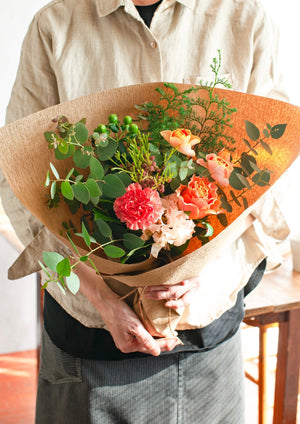
March Birth Flowers: A List of Birthday Flowers and Their Meanings

A birth flower is a flower assigned to each day, along with its flower language.
For a loved one's birthday, it's wonderful to give a bouquet or flower arrangement based on their birth flower, or on a flower with a meaningful flower language or color.
■ March 1st Birth Flower: Cornflower

| Botanical Name | Cornflower |
| Scientific Name | Centaurea cyanus |
| Family | Asteraceae |
| Genus | Centaurea |
| Origin | Southeastern Europe |
| Blooming Season | December - July |
The cornflower is named for its flower shape, which resembles a "yaguruma" (a spoked wheel used on traditional Japanese floats), and it is the national flower of Germany.
Its flower meanings are "delicacy," "elegance," "trust," and "education."
The origin of these flower meanings comes from an old tale where a Prussian queen was picking cornflowers with her princes and teaching them about life.
■ March 2nd Birth Flower: Buttercup

| Botanical Name | Buttercup |
| Scientific Name | Ranunculus |
| Family | Ranunculaceae |
| Genus | Ranunculus |
| Origin | Mediterranean coast |
| Blooming Season | April - July |
Also known as "Umanohashigata" (literally "horse's hoof"), this flower can be seen throughout Japan.
Its flower meanings are "childishness," "glory," and "success."
These flower meanings are associated with the buttercup's vibrant golden color, and "childishness" in particular reflects its simple, wild-growing appearance.
Other birth flowers for March 2nd include Ranunculus, Stock, and Armeria.
The flower meanings for Ranunculus are "very charming," "radiant charm," and "brilliance,"
for Stock are "eternal beauty," "bond of love," "abundant love," and "courtship,"
and for Armeria are "consideration," "thoughtfulness," and "hospitality."
■ March 3rd Birth Flower: Peach

| Botanical Name | Peach |
| Scientific Name | Amygdalus persica (Prunus persica) |
| Family | Rosaceae |
| Genus | Prunus |
| Origin | China |
| Blooming Season | June - September |
Peaches bloom with vibrant flowers from March to May.
Its flower meanings are "charming," "good-natured," and "unbeatable."
As peach blossoms symbolize women, "good-natured" and "charming" are associated with them.
Additionally, "unbeatable" is said to originate from a folktale where Izanagi-no-Mikoto threw peaches at demons.
Another birth flower for March 3rd is Crimson Clover.
The flower meanings for Crimson Clover are "relieve my suffering," "with you, pain is eased," "you ease my pain," and "peace of mind."
■ March 4th Birth Flower: Raspberry

| Botanical Name | Raspberry |
| Scientific Name | Rubus idaeus |
| Family | Rosaceae |
| Genus | Rubus |
| Origin | Unknown |
| Blooming Season | Late June - Mid-July |
Although known as a fruit, the raspberry (or wild berry) also produces delicate flowers in spring.
Its flower meanings are "love," "humility," "envy," and "deep regret."
The flower meaning of "deep regret" is said to come from the fact that despite the raspberry's deliciousness and cute appearance, one can get injured by its sharp thorns if touched carelessly.
Other birth flowers for March 4th include Azalea, Pelargonium, and Corydalis fumariifolia.
The flower meanings for Azalea are "temperance," "abstinence," and "joy of love,"
for Pelargonium include many meanings such as "love," "respect," "determination," "yearning wish," "happiness with you," "ardent faith," "gorgeous attire," "true friendship," "good upbringing," "foolishness," and "airs of superiority,"
and for Corydalis fumariifolia are "joy" and "I will help you."
■ March 5th Birth Flower: Linaria

| Botanical Name | Linaria |
| Scientific Name | Linaria |
| Family | Plantaginaceae |
| Genus | Linaria |
| Origin | Temperate regions of the Northern Hemisphere |
| Blooming Season | Mid-March - Early July |
Linaria, also known as "Hime Kingyosou" (little snapdragon), is a spring flower.
Its flower meanings are "notice this love," "confused maiden's heart," and "illusion."
Linaria grows in clusters and has a somewhat fleeting atmosphere.
This appearance is said to have led to these flower meanings, evoking an unrequited love hoping to be noticed, or a maiden's confused heart.
Other birth flowers for March 5th include Clivia, Cornflower, and Linaria.
The flower meanings for Clivia are "sincerity," "nobility," and "compassion,"
for Cornflower are "delicacy," "grace," "elegance," "trust," "refinement," and "purity,"
and for Linaria are "notice this love," "confused maiden's heart," and "illusion."
■ March 6th Birth Flower: Daisy

| Botanical Name | Daisy |
| Scientific Name | Bellis perennis |
| Family | Asteraceae |
| Genus | Bellis |
| Origin | Europe and Mediterranean coast |
| Blooming Season | Late December - Early May |
Also called "Hinagiku" (chrysanthemum of the chicks) in Japan, this flower is popular as an ornamental plant.
Its flower meanings are "purity," "beauty," "peace," and "hope."
Daisies open when exposed to light, shining brightly white. This cheerful appearance is believed to be the reason for its positive flower meanings such as purity and beauty.
Other birth flowers for March 6th include Winter Jasmine and Horsetail.
The flower meanings for Winter Jasmine are "expectation," "modest beauty," and "grace,"
and for Horsetail are "effort," "ambition," "surprise," and "amazement."
■ March 7th Birth Flower: Anemone flaccida

| Botanical Name | Anemone flaccida |
| Scientific Name | Anemone flaccida |
| Family | Ranunculaceae |
| Genus | Anemone |
| Origin | East Asia |
| Blooming Season | March - May |
Anemone flaccida is a representative wild grass of spring, often seen after the snow melts.
The flower meanings for Anemone flaccida are "cooperation," "friendship," and "never apart."
As its name suggests (Nirinso means "two-flower plant"), it produces two flowers from a single stem.
This appearance led to flower meanings like "cooperation" and "friendship," reflecting their mutually supportive nature.
Other birth flowers for March 7th include Campanula and Old Man's Beard.
The flower meanings for Campanula are "gratitude," "sincere love," "sympathy," "fidelity," and "declaring one's feelings,"
and for Old Man's Beard are "asking for nothing," "service," "betrayed love," "undeclared love," "pure heart," and "splendor."
■ March 8th Birth Flower: Chestnut

| Botanical Name | Chestnut |
| Scientific Name | Castanea crenata |
| Family | Fagaceae |
| Genus | Castanea |
| Origin | Japan, Korean Peninsula |
| Blooming Season | Late August - Early November |
Chestnuts, familiar to everyone as a fruit used in Mont Blanc and marrons glacés, also have their own flower meanings.
The flower meanings for Chestnut are "luxury," "extravagance," and "be fair to me."
The meanings of luxury and extravagance come from the fact that chestnuts were once considered a luxury item.
In the West, chestnut trees are also a symbol of "justice," which is why "fairness" is also one of its flower meanings.
Other birth flowers for March 8th include Nigella, Blue Star, and Kobushi Magnolia.
Nigella has many flower meanings such as "future," "indomitable spirit," "confusion," "bewilderment," "secret joy," "meeting in a dream," "love in a dream," and "deep love."
The flower meanings for Blue Star are "happy love," "mutual trust," "nostalgia," "star spirit," "love too soon," and "heart-wrenching feelings,"
and for Kobushi Magnolia are "welcome," "friendship," and "loveliness."
■ March 9th Birth Flower: Japanese Andromeda

| Botanical Name | Japanese Andromeda |
| Scientific Name | Pieris japonica |
| Family | Ericaceae |
| Genus | Pieris |
| Origin | Japan, Eastern China, Taiwan |
| Blooming Season | Late February - Early April |
Japanese Andromeda is a tree that bears round, glossy flowers in clusters in spring.
The flower meanings for Japanese Andromeda are "sacrifice," "devotion," and "pure heart."
Its English name is "Andromeda," and the flower meanings "sacrifice" and "devotion" originate from the Greek myth featuring Andromeda, the Ethiopian princess.
Other birth flowers for March 9th include Larch and Crocus.
The flower meanings for Larch are "boldness," "daring," and "courage,"
and for Crocus are "trust" and "joy of youth."
■ March 10th Birth Flower: Elm

| Botanical Name | Elm |
| Scientific Name | Ulmus glabra |
| Family | Ulmaceae |
| Genus | Ulmus |
| Origin | Japan, China, Korean Peninsula, Russia |
Elm is a plant commonly seen in Japan as a street tree or park tree, and it bears small flowers in spring.
The flower meanings for Elm are "nobility" and "dignity."
In the wild, it mainly grows in mountainous areas and becomes a very tall tree.
In Norse mythology, the first woman was born from an elm tree, and her husband from an ash tree.
Other birth flowers for March 10th include Lupine and Shasta Daisy.
The flower meanings for Lupine are "greed," "imagination," and "fantasy,"
and for Shasta Daisy are "patience" and "enduring all."
■ March 11th Birth Flower: Chicory

| Botanical Name | Chicory |
| Scientific Name | Cichorium |
| Family | Asteraceae |
| Genus | Cichorium |
| Origin | Europe |
| Blooming Season | May - September |
Chicory is a type of herb, and it's a vegetable so popular in Europe that it's often found in salads.
The flower meanings for Chicory are "waiting in vain" and "frugality."
Because of its colorful and large flowers that cheer people up, and its positive impression, it is associated with flower meanings like "hope" and "optimism."
Other birth flowers for March 11th include Spiraea and California Poppy.
The flower meanings for Spiraea are "charm," "whimsical," "admirable," and "quiet thoughts,"
and for California Poppy are "wealth," "glory," and "hope."
■ March 12th Birth Flower: Birch

| Botanical Name | White Birch |
| Scientific Name | Betula |
| Family | Betulaceae |
| Genus | Betula |
| Origin | East Asia |
| Blooming Season | April - May |
These are trees with white bark that stand in highlands. Their official name is "Shirakanba" (white birch).
The flower meaning for Birch is "perseverance."
Birch trees strongly dislike summer heat but are incredibly resilient to cold, easily enduring blizzards.
Seeing this, people assigned the flower meaning of "perseverance" to the birch.
Other birth flowers for March 12th include Anemone, Broom, and Horsetail.
The flower meanings for Anemone are "expectation," "fleeting love," and "true love,"
for Broom are "philanthropy," "humility," "modesty," "purity," "cleanliness," "fertility," and "self-abasement,"
and for Horsetail are "effort," "ambition," "surprise," and "amazement."
■ March 13th Birth Flower: Daylily

| Botanical Name | Daylily |
| Scientific Name | Hemerocallis fulva |
| Family | Asphodelaceae |
| Genus | Hemerocallis |
| Origin | China |
| Blooming Season | July - August |
Daylilies bear orange, lily-like flowers and are mainly found blooming alongside fields and farm roads.
The flower meanings for Daylily are "forgetting sadness," "forgetting worries," and "forgetfulness of love."
Originally, daylilies were called "wasuregusa" (forgetting grass), which is the origin of these meanings.
Also, one of the reasons is that daylilies contain many components that promote sleep.
Other birth flowers for March 13th include Barrenwort, Anemone, Dandelion, and Alstroemeria.
The flower meanings for Barrenwort are "departure" and "I won't let you go,"
for Anemone are "expectation," "fleeting love," and "true love,"
for Dandelion are "oracle of love," "happiness," "divine message," and "sincere love,"
and for Alstroemeria are "persistence," "longing for the future," "exotic," and "mischievous thoughts."
■ March 14th Birth Flower: Almond

| Botanical Name | Almond |
| Scientific Name | cerasus dulcis |
| Family | Rosaceae |
| Genus | Prunus |
| Origin | Southwest Asia |
| Blooming Season | March - April |
This plant bears pink flowers similar to peaches, and it's the almond you often eat.
The language of almond flowers is "hope".
Almond trees bloom after Europe's long winter.
The pale pink blossoms give a sense of hope for spring, which is where the flower's meaning comes from.
Other birth flowers for March 14th include "Chamomile", "Sweet Alyssum", and "Blue Daisy".
Chamomile's flower language is "endurance in adversity", "strength born from adversity", "purity", "healing you", and "reconciliation".
Sweet Alyssum's flower language is "grace", "value surpassing beauty", and "leap".
Blue Daisy's flower language is "blessed", "happiness", and "cooperation".
■ March 15th Birth Flower: Hemlock

| Plant Name | Hemlock (Poison Hemlock) |
| Scientific Name | Conium maculatum |
| Family | Apiaceae |
| Genus | Conium |
| Origin | Europe |
| Blooming Season | July - September |
Also known as "poison carrot," this is a poisonous plant.
The language of hemlock flowers is "to risk one's life" and "not regretting death".
The English name "hemlock" straightforwardly means "poisonous plant".
In ancient Greece, this flower was reportedly used as a poison for executions.
Other birth flowers for March 15th include "Clivia", "Iberis", "Forget-me-not", and "White Lace Flower".
Clivia's flower language is "sincerity", "nobility", and "compassion".
Iberis's flower language is "captivating", "memories of first love", and "sweet temptation".
Forget-me-not's flower language is "don't forget me", "true love", and "true friendship".
White Lace Flower's flower language is "charming heart" and "faint thoughts".
■ March 16th Birth Flower: Spearmint

| Plant Name | Spearmint |
| Scientific Name | Mentha spicata |
| Family | Lamiaceae |
| Genus | Mentha |
| Origin | Mediterranean coast |
| Blooming Season | July - September |
Mint is often used in cooking and cocktails.
The language of spearmint flowers is "warmth of emotion".
In other countries, caring people are described as having "warmth of sentiment" and are compared to mint.
However, the exact origin of this meaning is said to be unclear.
Other birth flowers for March 16th include "Judas Tree" and "Flowering Crabapple".
Judas Tree's flower language is "betrayal", "distrust", "nobility", "joy", "awakening", and "prosperous life".
Flowering Crabapple's flower language is "gentleness", "glamour", and "sleeping beauty".
■ March 17th Birth Flower: Lupinus

| Plant Name | Lupinus |
| Scientific Name | Lupinus |
| Family | Fabaceae |
| Genus | Lupinus |
| Origin | North America |
| Blooming Season | Late April - June |
A flower that blooms in spring, extending its colorful spikes towards the sun.
The language of lupinus flowers is "greed", "imagination", and "you are my comfort".
Lupinus is a very strong flower that grows vigorously even in barren land. This is where the flower language "greed" comes from.
Also, in regions where lupinus is eaten, it is believed to enhance imagination, which is where the flower language "imagination" comes from.
Other birth flowers for March 17th include "Anthurium" and "Cornelian Cherry (Sanshuyu)".
Anthurium's flower language is "passion", "impressive", "heart in love", and "worldly desires".
Cornelian Cherry (Sanshuyu)'s flower language is "hardiness", "perseverance", "endurance", and "strong love".
■ March 18th Birth Flower: Gardenia

| Plant Name | Gardenia (Kuchinashi) |
| Scientific Name | Gardenia jasminoides |
| Family | Rubiaceae |
| Genus | Gardenia |
| Origin | Honshu (west of Tokai region), Shikoku, Kyushu, Okinawa |
| Blooming Season | June - July |
Gardenia is often planted as a park tree, with its striking white flowers.
The language of gardenia flowers is "bringing joy", "elegance", and "very happy".
When gardenia flowers bloom, a sweet scent wafts gently. This is where the flower language "bringing joy" comes from.
The flower language "very happy" originates from the custom in America where men would give gardenias to women at dance parties.
Other birth flowers for March 18th include "Flowering Dogwood" and "Tosa Mizuki".
Flowering Dogwood has many flower meanings such as "gratitude", "happiness", "requital", "permanence", "receiving thoughts", and "gorgeous love".
Tosa Mizuki's flower language is "elegance", "purity", and "message".
■ March 19th Birth Flower: Poppy

| Plant Name | Shirley Poppy (Hinageshi) |
| Scientific Name | Papaver rhoeas |
| Family | Papaveraceae |
| Genus | Papaver |
| Origin | Central Europe |
| Blooming Season | April - July |
Poppies, also called 'hinageshi', are colorful flowers that adorn spring flowerbeds.
The language of poppy flowers is "consolation", "delusion", "dreamer", and "premonition of love".
When poppies are cut, a milky white sap with analgesic and sedative properties is released, which was used medicinally, giving rise to the meanings "consolation" and "delusion".
"Premonition of love" is said to come from the way the flowers sway gently, likened to the fluttering feeling at the beginning of love.
Other birth flowers for March 19th include "Thistle", "Weeping Cherry", and "Shrimp Plant".
Thistle's flower language is "strictness", "retaliation", "don't touch me", and "independence".
Weeping Cherry's flower language is "grace", "mature beauty", "simplicity", and "deception".
Shrimp Plant's flower language is "jokester" and "unexpected encounter".
■ March 20th Birth Flower: Purple Tulip

| Plant Name | Tulip |
| Scientific Name | Tulipa gesneriana |
| Family | Liliaceae |
| Genus | Tulipa |
| Origin | East Asia, Central Asia, North Africa |
| Blooming Season | March - May |
The language of tulips changes depending on their color.
The language of purple tulips is "immortal love".
It's unclear why this particular flower language was given,
but perhaps the image associated with the color purple inspired the meaning of "immortal love."
Other birth flowers for March 20th include "Sweet Pea" and "Mitsumata".
Sweet Pea's flower language is "soaring like a butterfly", "new beginnings", "separation", "fond memories", and "eternal joy".
Mitsumata's flower language is "toughness", "family ties", and "eternal love".
Learn more about tulips here ▶︎
&YOUKAEN is selling bouquets using purple tulips!

Seasonal bouquet "pale lilac" with sweet peas and tulips
¥8,250-
■ March 21st Birth Flower: Jasmine

| Plant Name | Jasmine (Marilyka) |
| Scientific Name | Jasminum sambac |
| Family | Oleaceae |
| Genus | Jasminum |
| Origin | Tropical Asia |
| Blooming Season | July - September |
Jasmine is a plant that bears lovely white flowers.
The language of jasmine flowers is "sensual", "amiable", "graceful", and "pure".
Jasmine flowers emit a very rich fragrance that captivates people.
This is believed to be the origin of the flower meanings "sensual" and "amiable".
Other birth flowers for March 21st include "Witch Hazel" and "Fritillaria".
Witch Hazel's flower language is "inspiration", "mystery", "spell", "magic", "return of happiness", and "good harvest".
Fritillaria's flower language is "dignified appearance", "talent", "humble heart", and "dignity".
■ March 22nd Birth Flower: Tulip

| Plant Name | Tulip |
| Scientific Name | Tulipa gesneriana |
| Family | Liliaceae |
| Genus | Tulipa |
| Origin | East Asia, Central Asia, North Africa |
| Blooming Season | March - May |
Tulips are popular spring flowers, both in gardens and as cut flowers.
The language of tulips is "compassion" and "philanthropy".
The flower language originates from a Dutch legend. Three knights proposed to a maiden, but the kind-hearted maiden could not choose just one.
So the maiden prayed to Flora, the goddess of flowers, to "turn me into a flower," and she became a tulip.
This is where the flower meanings "compassion" and "philanthropy" come from.
Other birth flowers for March 22nd include "Forsythia", "Crimson Clover", and "Rose of Sharon".
Forsythia's flower language is "hope", "expectation", "rich hope", and "fulfilled hope".
Crimson Clover's flower language is "pain is alleviated with you", "my happiness", and "influence".
Rose of Sharon's flower language is "delicate beauty", "belief", and "respect".
■ March 23rd Birth Flower: Gladiolus

| Plant Name | Gladiolus (To-shobu) |
| Scientific Name | Gladiolus |
| Family | Iridaceae |
| Genus | Gladiolus |
| Origin | South Africa, Cape Region |
| Blooming Season | March - May |
Gladiolus, a flower that grows straight towards the sun.
The language of gladiolus flowers is "victory", "secret rendezvous", and "secret love".
The gladiolus flower's appearance is said to evoke a sword, which is linked to the flower meaning "victory".
Also, in ancient Europe, gladiolus was secretly given to a beloved, and the number of flowers indicated the time of their rendezvous. This is where the flower meanings "secret rendezvous" and "secret love" come from.
Other birth flowers for March 23rd include "Dandelion", "Delphinium", and "Sweet Alyssum".
Dandelion's flower language is "oracle of love", "happiness", "divination", and "sincere love".
Delphinium's flower language is "clarity", "you spread happiness", "nobility", and "everyone comforts you".
Sweet Alyssum's flower language is "grace" and "value surpassing beauty".
■ March 24th Birth Flower: California Poppy

| Plant Name | California Poppy (Hanabishiso) |
| Scientific Name | Eschscholzia californica |
| Family | Papaveraceae |
| Genus | Eschscholzia |
| Origin | Western North America |
| Blooming Season | Mid-April - June |
California poppies bloom with vibrant orange flowers, often covering vast areas like a carpet.
The language of California poppies is "wealth", "glory", and "hope".
It originates from when Spanish explorers, stepping into the native habitat of California poppies, saw the land covered in orange flowers and named it "golden land".
Other birth flowers for March 24th include "Dogtooth Violet" and "Kobus Magnolia".
Dogtooth Violet's flower language is "first love", "enduring loneliness", and "jealousy".
Kobus Magnolia's flower language is "friendship", "trust", "welcome", and "cuteness".
■ March 25th Birth Flower: Caesalpinia japonica

| Plant Name | Caesalpinia japonica |
| Scientific Name | Caesalpinia decapetala var.japonica |
| Family | Fabaceae |
| Genus | Caesalpinia |
| Origin | Eastern Eurasian continent |
| Blooming Season | April - June |
This plant bears small yellow flowers that bloom upwards in early summer.
The language of Caesalpinia japonica flowers is "sage".
This plant is extremely strong and can survive even in harsh natural environments.
Its appearance is said to embody sagacity backed by experience and symbolize deep knowledge.
Other birth flowers for March 25th include "Alstroemeria" and "Flowering Crabapple".
Alstroemeria's flower language is "persistence", "longing for the future", "exotic", and "devilish thoughts".
Flowering Crabapple's flower language is "gentleness", "enchantment", and "glamour".
■ March 26th Birth Flower: White Primrose

| Plant Name | Primrose (Sakuraso) |
| Scientific Name | Primula sieboldii |
| Family | Primulaceae |
| Genus | Primula |
| Origin | Eastern Siberia - Northeastern China |
| Blooming Season | April - May |
One of the flowers that heralds the arrival of spring. It was popular among samurai during the Edo period.
The language of white primrose flowers is "first love".
This flower meaning was given due to its pure appearance, and it perfectly suits the white primrose.
Primroses are popular flowers, and primrose exhibitions are held throughout Japan.
Other birth flowers for March 26th include "Ipheion" and "Shunran".
Ipheion's flower language is "sad farewell", "baseness", "dear one", "enduring love", "wish upon a star", and "resentment".
Shunran's flower language is "unadorned heart", "modest beauty", "dignity", and "purity".
■ March 27th Birth Flower: Digitalis

| Plant Name | Foxglove |
| Scientific Name | Digitalis |
| Family | Plantaginaceae |
| Genus | Digitalis |
| Origin | Europe, Northeast Africa - Central Asia |
| Blooming Season | May - June |
Foxglove is a classic flower in English gardens, known for its striking appearance.
The flower meanings of Foxglove are "ardent love" and "insincerity."
"Ardent love" is derived from the foxglove's poison, which causes dizziness and headaches, leading to its association with people troubled by love.
"Insincerity" originates from Greek mythology. Zeus, angered by his wife Hera's dice game, threw the dice away, and they transformed into foxgloves.
In addition, "Bridal Veil" is the birth flower for March 27,
and the flower meanings of Bridal Veil are "happiness of the bride," "always wishing for happiness," "to keep wishing," "happiness," "abundance," and "vibrant person."
■ March 28 Birth Flower: "Japanese Kerria"

| Plant Name | Japanese Kerria |
| Scientific Name | Kerria japonica |
| Family | Rosaceae |
| Genus | Kerria |
| Origin | Japan, China |
| Blooming Season | April - May |
Japanese Kerria is a flower that has been beloved in Japan for a long time, characterized by its swaying appearance in the mountains and fields.
The flower meanings of Japanese Kerria are "elegance," "nobility," and "good fortune."
"Elegance" and "nobility" are said to be derived from the appearance of the Japanese Kerria, while the flower meaning "good fortune" is derived from a legend that gold coins that fell into a valley transformed into Japanese Kerria flowers.
In addition, "Calanthe Orchid" is the birth flower for March 28,
and the flower meanings of Calanthe Orchid are "clear eyes," "be yourself," and "beautiful and elegant person."
■ March 29 Birth Flower: "Dandelion"

| Plant Name | Dandelion |
| Scientific Name | Taraxacum |
| Family | Asteraceae |
| Genus | Taraxacum |
| Origin | Europe |
| Blooming Season | April - October |
Dandelions are a common sight in Japan, blooming in spring and developing fluffy seed heads when their flowers fade.
The flower meanings of dandelion are "oracle of love," "happiness," and "sincere love."
Dandelion flowers have been used for fortune-telling in Europe since ancient times.
It is said that if you can blow away all the fluffy seeds in one breath, your love will come true, which led to the flower meanings related to "oracle."
In addition, "Burdock," "Wild Strawberry," and "Plum" are the birth flowers for March 29,
and the flower meanings of Burdock are "don't touch me," "persistently begging," "caution," and "don't bully me,"
Wild Strawberry are "respect and love," "happy home,"
and Plum are "fidelity," "chastity," "independence," "suspicion," "sweet life," "misunderstanding," and "difficulty."
■ March 30 Birth Flower: "Weeping Cherry"

| Plant Name | Weeping Cherry |
| Scientific Name | Cerasus itosakura ‘Pendula’ Maxim |
| Family | Rosaceae |
| Genus | Prunus |
| Origin | Japan |
| Blooming Season | March - April |
The Weeping Cherry is a cherry blossom that can be seen during the cherry blossom viewing season. It is very popular and makes for a great photo spot.
The flower meanings of Weeping Cherry are "deception," "grace," and "mature beauty."
The flower meaning "deception" is derived from its drooping appearance, which looks as if it is pretending to be something it's not.
Also, "grace" and "mature beauty" express the visual beauty of the Weeping Cherry.
In addition, "Broom" and "Armeria" are the birth flowers for March 30,
and the flower meanings of Broom are "charity," "humility," "modesty," "purity," "cleanliness," "fertility," and "self-abasement,"
while Armeria are "consideration," "thoughtfulness," and "hospitality."
■ March 31 Birth Flower: "Nigella"

| Plant Name | Nigella |
| Scientific Name | Nigella |
| Family | Ranunculaceae |
| Genus | Nigella |
| Origin | Mediterranean coast to West Asia |
| Blooming Season | April - July |
Nigella is a flower characterized by its blue hues and unusual flower shape.
The flower meanings of Nigella are "future," "indomitable spirit," "bewilderment," and "perplexed."
It was a particularly beloved flower in medieval Europe, symbolizing inner beauty.
The process of its seeds maturing, which evokes hope for the future, led to the flower meaning "future."
In addition, "Strawberry" is the birth flower for March 31,
and the flower meanings of Strawberry are "happy home," "respect and love," "foresight," and "you delight me."
Apr 11, 2024