February Birth Flowers: A List of Birthday Flowers and Their Meanings

Here are the birth flowers for February, a month that includes Valentine's Day.
A birth flower is a flower and its meaning assigned to each specific day of the year.
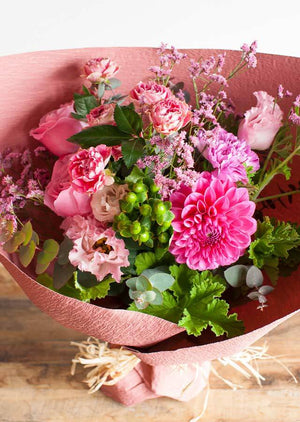
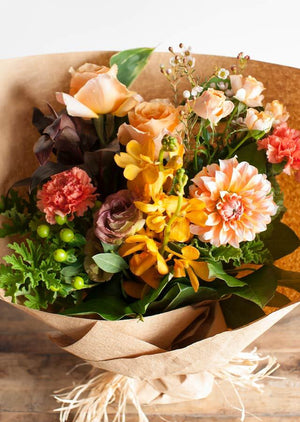
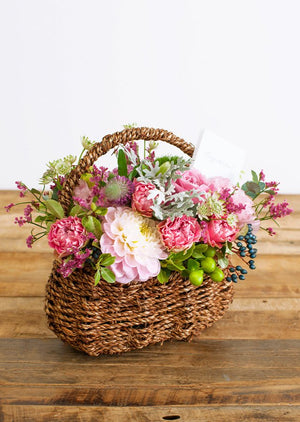
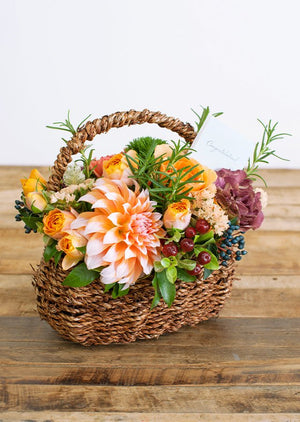
For a loved one's birthday, it's wonderful to give them a bouquet or flower arrangement inspired by their birth flower, its meaning, or color.
See February Birthday Gifts ▶︎
■ February 1st Birth Flower: Plum Blossom (Ume)

| Plant Name | Ume (Japanese Apricot) |
| Scientific Name | Armeniaca mume(Prunus mume) |
| Family | Rosaceae |
| Genus | Armeniaca (Prunus) |
| Origin | China |
| Blooming Season | January - March |
Ume is a tree in the Rosaceae family, Prunus genus, and blooms from January to March.
Its flower meanings are "fidelity," "nobility," and "patience."
The origin of these flower meanings is thought to be the plum blossom's appearance, which proudly blooms beautifully amidst snow and cold winds during the still-chilly winter months.
Other birth flowers for February 1st include "Marguerite" and "Primrose."
Marguerite's flower meanings are "love divination," "secret love," "true love," "sincerity," and "trust."
Primrose's flower meanings are "purity," "first love," "admiration," "hopes of youth," and "retaining natural beauty."
■ February 2nd Birth Flower: Flowering Quince (Boke)

| Plant Name | Boke (Flowering Quince) |
| Scientific Name | Chaenomeles speciosa |
| Family | Rosaceae |
| Genus | Chaenomeles |
| Origin | China |
| Blooming Season | March - May |
This flower has been used in Japan as a garden tree and for bonsai since ancient times.
Its flower meanings are "pioneer," "precocity," and "ordinariness."
"Pioneer" and "precocity" are derived from the Chinese name for Boke, "Fang Chun Hua," which means to emit the scent of spring earlier than any other flower.
The flower meaning "ordinariness" seems to have been given because it is commonly used for hedges in many homes.
Other birth flowers for February 2nd include "Snowdrop," "Pansy," and "White Freesia."
Snowdrop's flower meanings are "hope," "consolation," and "bittersweet love."
Pansy's flower meanings are "think of me" and "contemplation."
White Freesia's flower meanings are "innocence," "childlike innocence," and "purity."
■ February 3rd Birth Flower: Camellia (Tsubaki)

| Plant Name | Tsubaki (Camellia) |
| Scientific Name | Camellia japonica |
| Family | Theaceae |
| Genus | Camellia |
| Origin | Japan |
| Blooming Season | February - April |
This plant blooms in the cold winter and has been particularly cherished by tea masters in Japan.
Its flower meanings are "modest kindness" and "modest splendor."
Camellias are very beautiful flowers, but they have no scent, and this characteristic is said to be the origin of their flower meanings.
Another birth flower for February 3rd is "Eranthis."
Eranthis's flower meanings are "misanthropy," "radiance," "smile," and "grace."
■ February 4th Birth Flower: Hitorishizuka

| Plant Name | Hitorishizuka |
| Scientific Name | Chloranthus japonicus |
| Family | Chloranthaceae |
| Genus | Chloranthus |
| Origin | Japan |
| Blooming Season | April - May |
Hitorishizuka is a plant characterized by its four leaves, and it grows wild in moist areas of forests and mountains.
Its flower meanings are "hidden beauty" and "respond to love."
These flower meanings are derived from Shizuka Gozen, a woman loved by Minamoto no Yoshitsune, a hero from the Kamakura period.
The beautiful dance of Shizuka Gozen is also the origin of the name Hitorishizuka.
Another birth flower for February 4th is "Red Primrose."
Red Primrose's flower meaning is "secret of beauty."
■ February 5th Birth Flower: Fern

| Plant Name | Fern |
| Scientific Name | pteridophytes |
Ferns are plants that reproduce by spores instead of seeds and grow wild in dark areas of parks and forests.
Its flower meanings are "sincerity" and "fascination."
Fern leaves grow in a very regular pattern, which is why "sincerity" is one of its flower meanings.
In the past, ferns were believed to bloom only on the summer solstice, which is why "fascination" is another flower meaning.
Other birth flowers for February 5th include "Pulsatilla," "Primrose," and "Flowering Quince."
Pulsatilla's flower meanings are "betrayed love," "unspoken love," "treacherous love," and "immoral love."
Primrose's flower meanings are "hopes of youth," "first love," "retaining natural beauty," "purity," and "admiration."
Flowering Quince's flower meanings are "pioneer," "precocity," "ordinariness," and "passion."
■ February 6th Birth Flower: Peony (Shakuyaku)

| Plant Name | Shakuyaku (Peony) |
| Scientific Name | Paeonia lactiflora |
| Family | Paeoniaceae |
| Genus | Paeonia |
| Origin | Northeastern Eurasia |
| Blooming Season | May - June |
Peonies are very popular flowers at flower shops, producing voluminous and beautiful blooms.
Its flower meanings are "shyness," "bashfulness," and "modesty."
There is a theory that it originates from an English folk tale in which a shy fairy hides in a peony, and another theory that it comes from the peony's characteristic of closing its flowers in the evening.
Other birth flowers for February 6th include "Rape Blossom" and "Bluebell."
Rape Blossom's flower meanings are "lively love," "competition," "small happiness," "liveliness," "vibrancy," and "full of energy."
Bluebell's flower meanings are "humility" and "unwavering heart."
&YOUKAEN is selling bouquets using peonies!

Limited Time Seasonal Bouquet "Peonies and Seasonal Greenery"
¥8,800-
■ February 7th Birth Flower: Forget-Me-Not (Wasurenagusa)

| Plant Name | Wasurenagusa (Forget-Me-Not) |
| Scientific Name | Myosotis |
| Family | Boraginaceae |
| Genus | Myosotis |
| Origin | Temperate regions worldwide |
| Blooming Season | March - June |
This flower produces small blue blossoms and is characterized by withering in summer.
Forget-Me-Not's flower meanings are "true love," "genuine love," and "don't forget me."
Long ago, a young knight picked forget-me-nots blooming by the riverbank for his lover, but was swept away by the river.
He managed to throw the forget-me-nots to the bank and said, "Don't forget me," which is the origin of the flower's meanings.
Other birth flowers for February 7th include "Plum Blossom (Ume)" and "Hyacinth."
Plum Blossom's flower meanings are "grace," "nobility," "patience," and "fidelity."
Hyacinth's flower meanings are "love beyond sorrow," "game," and "sport."
■ February 8th Birth Flower: Strawberry Geranium (Yukinoshita)

| Plant Name | Yukinoshita (Strawberry Geranium) |
| Scientific Name | Saxifraga stolonifera |
| Family | Saxifragaceae |
| Genus | Saxifraga |
| Origin | Japan |
| Blooming Season | May - June |
Yukinoshita is a strong plant that produces green flowers even when covered in snow.
Yukinoshita's flower meanings are "deep affection," "philanthropy," and "love."
These flower meanings are derived from the fact that Yukinoshita was used as a medicinal herb, particularly effective for children's fevers.
It was also consumed as a wild edible plant.
Other birth flowers for February 8th include "Peony (Shakuyaku)" and "Calendula."
Peony's (Shakuyaku) flower meanings are "shyness," "bashfulness," "modesty," and "humility."
Calendula's flower meanings are "tender love," "maidenly figure," "unfading love," and "quiet thoughts."
■ February 9th Birth Flower: Myrtle (Ginbaika)

| Plant Name | Ginbaika (Myrtle) |
| Scientific Name | Myrtus communis |
| Family | Myrtaceae |
| Genus | Myrtus |
| Origin | Mediterranean to Southwest Europe |
| Blooming Season | May - June |
This flowering shrub produces fluffy white flowers with a pleasant fragrance.
Myrtle's flower meanings are "noble beauty," "love," and "whispers of love."
The origin of these flower meanings is said to be from a Greek myth where myrtle was offered to praise the beauty of Aphrodite, the goddess of beauty.
Other birth flowers for February 9th include "Stock," "Calendula," and "Trumpet Daffodil."
Stock's flower meanings are "eternal beauty," "bond of affection," and "courtship."
Calendula's flower meanings are "tender love," "maidenly figure," "unfading love," and "quiet thoughts."
Trumpet Daffodil's flower meanings are "unrequited love" and "respect."
■ February 10th Birth Flower: Daphne (Jinchoge)

| Plant Name | Jinchoge (Daphne) |
| Scientific Name | Daphne odora |
| Family | Thymelaeaceae |
| Genus | Daphne |
| Origin | Central China to Yunnan Province, Himalayan region |
| Blooming Season | February - April |
Daphne is a flowering shrub that produces a cluster of small flowers at the tips of its branches.
Daphne's flower meanings are "eternity," "immortality," and "indestructibility."
These flower meanings are derived from Daphne's leaves.
As an evergreen tree, its fresh green leaves throughout the year gave people the impression of "eternity" and "indestructibility."
Another birth flower for February 10th is "Himalayan Saxifrage."
Himalayan Saxifrage's flower meanings are "hidden emotions" and "adaptability."
■ February 11th Birth Flower: Gerbera

| Plant Name | Gerbera |
| Scientific Name | Gerbera jamesonii Hybrid |
| Family | Asteraceae |
| Genus | Gerbera |
| Origin | South Africa |
| Blooming Season | All year round |
Gerberas are characterized by their large flowers. They are very popular and available all year round at flower shops.
Gerbera's flower meanings are "hope," "positivity," and "always moving forward."
Their colorful and large blooms cheer people up, and their positive impression is the origin of flower meanings such as "hope" and "positivity."
Other birth flowers for February 11th include "Freesia" and "Speedwell."
Freesia's flower meanings are "affection," "friendship," and "gratitude."
Speedwell's flower meanings are "trust," "loyalty," and "purity."
Click here for more about Gerbera ▶︎
&YOUKAEN is selling bouquets using gerberas!

Colorful Gerbera Bouquet "bonbon"
¥4,980-
■ February 12th Birth Flower: Forsythia (Rengyo)

| Plant Name | Rengyo (Forsythia) |
| Scientific Name | Forsythia |
| Family | Oleaceae |
| Genus | Forsythia |
| Origin | China |
| Blooming Season | March - April |
This plant produces many yellow flowers on long branches.
Forsythia's flower meanings are "expectation" and "hope."
It is believed that these flower meanings were given because forsythia plants sprout new buds as soon as their flowers fall.
Other birth flowers for February 12th include "Witch Hazel" and "Mistletoe."
Witch Hazel's flower meanings are "inspiration," "mystery," "charm," "magic," "return of happiness," and "bountiful harvest."
Mistletoe's flower meanings are "patience," "overcoming difficulties," and "kiss me."
■ February 13th Birth Flower: Edelweiss

| Plant Name | Edelweiss |
| Scientific Name | Leontopodium japonicum |
| Family | Asteraceae |
| Genus | Leontopodium |
| Origin | European Alps |
| Blooming Season | May - June |
Edelweiss is a white flower that blooms in high-altitude areas of Europe.
The flower meanings of Edelweiss are "refined beauty," "nobility," "courage," "perseverance," "the thrill of first love," and "precious memories."
In the Alps, edelweiss was a flower given by men to women when proposing marriage.
Since edelweiss grows high in the mountains, picking it involves disregarding danger, which is why it has been given the flower meanings of "courage" and "perseverance."
In addition,"rhodanthe" and "purple freesia"are the birth flowers for February 13th.
The flower meanings of rhodanthe are "unwavering love," "gentle nature," "endless friendship," and "soaring flight,"while the flower meaning of mistletoe is "admiration."
■ February 14th Birth Flower: Acacia

| Botanical Name | Mimosa (Silver Wattle) |
| Scientific Name | Acacia baileyana |
| Family | Fabaceae |
| Genus | Acacia |
| Origin | Southeastern Australia |
| Blooming Season | March - April |
This is a stylish flowering tree that bears fluffy yellow flowers similar to mimosa.
The flower meaning of acacia is "secret love."
This flower meaning comes from the custom of Native Americans giving acacia flowers as a declaration of love.
There is also a story that it was a custom of the Aboriginal people.
In addition,"chamomile" and "cineraria"are the birth flowers for February 14th.
The flower meanings of chamomile are "purity," "endurance in adversity," and "healing you,"while the flower meanings of cineraria are "liveliness," "joy," and "happiness."
Click here to purchase Mimosa ▶︎
■ February 15th Birth Flower: Mitsumata

| Botanical Name | Mitsumata (Oriental Paperbush) |
| Scientific Name | Edgeworthia chrysantha(Edgeworthia papyrifera) |
| Family | Thymelaeaceae |
| Genus | Edgeworthia |
| Origin | China |
| Blooming Season | March - April |
This is a tree that grows wild in the mountains of Japan and has been used as a material for Japanese paper.
The flower meanings of Mitsumata are "toughness" and "family ties."
These flower meanings are said to have come from the fact that the bark of Mitsumata is very tough.
This strong Mitsumata resin has been used as a raw material for paper.
In addition,"daisy" and "white sweet pea"are the birth flowers for February 15th.
The flower meanings of daisy are "hope," "peace," "beauty," "purity," and "the same feeling as you,"while the flower meaning of white sweet pea is "faint joy."
■ February 16th Birth Flower: Laurel

| Botanical Name | Laurel |
| Scientific Name | Laurus nobilis |
| Family | Lauraceae |
| Genus | Laurus |
| Origin | Mediterranean region |
| Blooming Season | April - May |
This is a tree that has been considered sacred in Europe since ancient times.
The flower meanings of laurel are "glory," "victory," and "honor."
The laurel was considered sacred to Apollo, and from ancient times, wreaths made of laurel branches were bestowed upon heroes to honor them, which is where these flower meanings come from.
In addition,"saintpaulia" and "daffodil"are the birth flowers for February 16th.
The flower meanings of saintpaulia are "small love" and "familiarity,"while the flower meanings of daffodil are "unrequited love" and "respect."
■ February 17th Birth Flower: Snowflake

| Botanical Name | Snowflake |
| Scientific Name | Leucojum aestivum |
| Family | Amaryllidaceae |
| Genus | Leucojum |
| Origin | Central Europe and Mediterranean coast |
| Blooming Season | March - April |
This plant bears lily-of-the-valley-like flowers and is very charming and popular.
The flower meanings of snowflake are "purity," "chastity," and "innocent heart."
We infer that these flower meanings are attributed to its pure white flowers and the clear contrast with its dark green foliage.
In addition,"Japanese quince"is the birth flower for February 17th. The flower meanings of Japanese quince are "pioneer," "precocious," "ordinary," and "passion."
■ February 18th Birth Flower: Buttercup

| Botanical Name | Buttercup |
| Scientific Name | Ranunculus |
| Family | Ranunculaceae |
| Genus | Ranunculus |
| Origin | Mediterranean coast |
| Blooming Season | April - July |
This is a wild flower characterized by its glossy yellow petals.
The flower meanings of buttercup are "childlikeness," "glory," and "success."
Buttercups are characterized by their slender stems and often sway in the wind, which is why they are given the flower meaning "childlikeness."
"Glory" and "success" are derived from the splendid impression of their glossy petals.
In addition, "dandelion," "alstroemeria," and "white snapdragon"are the birth flowers for February 18th.
The flower meanings of dandelion are "oracle of love," "divine oracle," and "sincere love,"while the flower meanings of alstroemeria are "persistence," "longing for the future," "exotic," and "impish thoughts,"
and the flower meaning of white snapdragon is "pure heart."
■ February 19th Birth Flower: Magnolia

| Botanical Name | Magnolia |
| Scientific Name | Magnolia liliiflora(Magnolia quinquepeta) |
| Family | Magnoliaceae |
| Genus | Magnolia |
| Origin | China |
| Blooming Season | April |
This is a deciduous tree that blooms with white and purple flowers from late January.
The flower meanings of magnolia are "sublimity" and "noble heart."
The magnolia flower was named for its resemblance to the lotus. Since the lotus is often depicted as a symbol of Buddha,
the magnolia flower also carries the flower meaning of "sublimity."
In addition, "dandelion" and "primrose"are the birth flowers for February 19th.
The flower meanings of dandelion are "oracle of love," "divine oracle," and "sincere love,"while the flower meanings of primrose are "the beginning and sorrow of youth," "youthful love," and "opening up destiny."
■ February 20th Birth Flower: Kalmia

| Botanical Name | Kalmia (Mountain Laurel) |
| Scientific Name | Kalmia latifolia |
| Family | Ericaceae |
| Genus | Kalmia |
| Origin | Eastern North America |
| Blooming Season | May - June |
Kalmia is a plant of the heather family, producing characteristic flowers in early spring.
The flower meanings of Kalmia are "great hope," "graceful woman," and "lively home."
Because small flowers bloom densely, the flower meaning "lively family" is attached to it.
"Great hope" and "graceful woman" are attributed to its bold, outstretched branches.
In addition, "rhododendron" and "winter jasmine"are the birth flowers for February 20th.
The flower meanings of rhododendron are "danger," "caution," "dignity," and "magnificence,"while the flower meanings of winter jasmine are "modest beauty," "blessing," and "expectation."
■ February 21st Birth Flower: Nemophila

| Botanical Name | Nemophila |
| Scientific Name | Nemophila |
| Family | Boraginaceae |
| Genus | Nemophila |
| Origin | Western North America |
| Blooming Season | April - May |
Nemophila is a popular flower for planters, characterized by its clear blue petals.
The flower meanings of nemophila are "lovely," "refreshing heart," and "success everywhere."
Nemophila was originally native to the Americas, but it thrived even after being brought to places across the sea, such as Europe, which is why it has been given the flower meaning "success everywhere."
In addition, "violet" and "cornelian cherry"are the birth flowers for February 21st.
The flower meanings of violet are "humility," "sincerity," and "small happiness,"while the flower meanings of cornelian cherry are "robustness," "persistence," "endurance," and "steadfast love."
■ February 22nd Birth Flower: Rose of Sharon

| Botanical Name | Rose of Sharon |
| Scientific Name | Hibiscus syriacus |
| Family | Malvaceae |
| Genus | Hibiscus |
| Origin | China |
| Blooming Season | July - September |
This is a plant that produces very large flowers and is designated as the national flower of Korea.
The flower meanings of Rose of Sharon are "faith" and "respect."
This flower is said to have been brought to Europe from Syria by the Crusaders in medieval Europe,
and its meanings are attributed to the Crusaders' fervent determination to persevere through harsh difficulties.
In addition, "rhodanthe" and "pale mallow"are the birth flowers for February 22nd.
The flower meanings of rhodanthe are "unwavering love," "gentle nature," "endless friendship," and "soaring flight,"while the flower meanings of pale mallow are "grace" and "charity."
■ February 23rd Birth Flower: Poppy

| Botanical Name | Poppy (Common Poppy) |
| Scientific Name | Papaver rhoeas |
| Family | Papaveraceae |
| Genus | Papaver |
| Origin | Central Europe |
| Blooming Season | April - July |
This flower is characterized by its thin, delicate petals and grows in large clusters in fields.
The flower meanings of poppy are "consolation," "fantasy," and "dreamer."
The narcotic milky sap contained in poppy stems has long been used as medicine,
and this fact is reflected in the flower meaning "consolation."
In addition, "daphne" and "apricot"are the birth flowers for February 23rd.
The flower meanings of daphne are "eternity," "immortality," "indestructibility," and "glory,"while the flower meanings of apricot are "timid love," "maiden's blush," "doubt," "suspicion," and "modesty."
■ February 24th Birth Flower: Primrose

| Botanical Name | Primrose |
| Scientific Name | Primula sieboldii |
| Family | Primulaceae |
| Genus | Primula |
| Origin | Eastern Siberia to Northeastern China |
| Blooming Season | April - May |
This is a plant that grows in clusters by riversides and in meadows in early spring, and its petals resemble cherry blossoms.
The flower meanings of primrose are "first love," "purity," and "hopes of youth."
Primroses have a very short blooming period and cannot be enjoyed for long, even though they are beautiful, which is why they are associated with the ephemeral meanings of "first love" and "hopes of youth."
In addition, "amaryllis," "crocus," and "periwinkle"are the birth flowers for February 24th.
The flower meanings of amaryllis are "talkative," "radiant beauty," "shyness," "timid heart," "pride," and "vanity,"while the flower meanings of crocus are "joy of youth," "longing," and "trust me,"
and the flower meanings of periwinkle are "gentle," "happy memories," "tender remembrance," "childhood friend," and "memories."
■ February 25th Birth Flower: Yucca

| Botanical Name | Yucca |
| Scientific Name | Yucca |
| Family | Asparagaceae |
| Genus | Yucca |
| Origin | North America to Central America |
Yucca is a foliage plant also known as "Youth Tree." It is characterized by its pointed leaves.
The flower meanings of yucca are "heroic," "great," and "splendid."
Due to the plant's robust appearance and the sharp shape of its leaves, it has been given valorous flower meanings such as "heroic" and "great."
In addition, "kalanchoe," "ranunculus," and "rose"are the birth flowers for February 25th.
The flower meanings of kalanchoe are "protecting you," "announcing happiness," "many small memories," and "generous heart,"while the flower meanings of ranunculus are "very attractive," "radiant charm," and "shining brightly,"
and the flower meanings of rose are "beauty" and "love."
■ February 26th Birth Flower: Adonis

| Botanical Name | Adonis (Pheasant's Eye) |
| Scientific Name | Adonis ramosa |
| Family | Ranunculaceae |
| Genus | Adonis |
| Origin | Hokkaido to Honshu, Japan |
| Blooming Season | February - April |
Adonis is a spring plant found in mountains throughout Japan. It is considered an auspicious flower.
The flower meanings of adonis are "inviting happiness," "eternal happiness," and "blessing."
It is a flower that announces the arrival of spring and has long been cherished in Japan as a flower that brings good fortune.
Therefore, it has been given flower meanings such as "inviting happiness" and "blessing."
In addition, "snowdrop" and "muscari"are the birth flowers for February 26th. The flower meanings of snowdrop are "hope," "consolation," and "bittersweet love," while the flower meanings of muscari are "generous love," "bright future," and "dreams."
■ February 27th Birth Flower: Crocus

| Botanical Name | Crocus (Saffron Crocus) |
| Scientific Name | Crocus |
| Family | Iridaceae |
| Genus | Crocus |
| Origin | Mediterranean region, Asia Minor |
| Blooming Season | February - April |
Crocuses are early spring flowers. Their lovely appearance is popular with people of all ages.
Their flower meanings are "regret of love," "longing," and "joy of youth."
These flower meanings also originate from Greek mythology, stemming from the tragedy of a boy named Crocus and a girl named Smilax,
leading to the flower meaning "regret of love."
Other birth flowers for February 27th include "Ornithogalum" and "Scilla."
Ornithogalum's flower meanings are "purity," "talent," "innocence," "spotlessness," and "cleanness," and
Scilla's flower meanings are "unchanging love," "sensitive heart," "patience," and "loneliness."
■ February 28th Birth Flower: Helichrysum

| Plant Name | Helichrysum |
| Scientific Name | Helichrysum |
| Family | Asteraceae |
| Genus | Helichrysum |
| Origin | Australia |
| Blooming Season | April to May |
These flowers have a glossy sheen to their petals, and their name means "golden sun" in Latin.
Helichrysum's flower meanings are "eternal memories" and "remembrance."
Helichrysum flowers have low moisture content, so when dried, they don't deform and
their color and luster remain beautiful. From this, the flower meaning "eternal memories" was derived.
Other birth flowers for February 27th include "Bay Laurel" and "Liverleaf."
Bay Laurel's flower meanings are "glory," "victory," and "honor," and
Liverleaf's flower meanings are "confidence," "trust," "shyness," and "secret."
■ February 29th Birth Flower: Armeria

| Plant Name | Armeria |
| Scientific Name | Armeria |
| Family | Plumbaginaceae |
| Genus | Armeria |
| Origin | Europe, North Africa, etc. |
| Blooming Season | March to May |
Also known as "Hanakanzashi" in Japan, Armeria means "near the sea" in Celtic.
Armeria's flower meanings are "consideration," "thoughtfulness," and "hospitality."
Armeria flowers bloom with small flowers gathered together as if nestling, so
from this warm appearance, the flower meanings "consideration" and "thoughtfulness" were derived.
How was it?
We hope that the birth flowers and their meanings will encourage you to love flowers even more. We also offer gifts perfect for February birthdays. Please take a look.
Mar 07, 2024