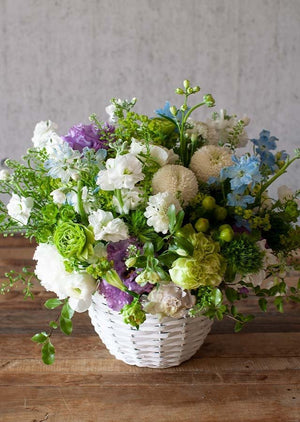
"Chrysanthemum," the classic offering flower

Long-lasting and believed to ward off evil spirits, it is a staple for offerings.
Recommended offering flower arrangement using chrysanthemums


"Higan occurs twice a year, but what exactly does it mean?" "I know it's a time to visit graves, but what is its origin?"
Higan, which comes twice a year with mild spring and autumn weather, is a time when many people visit graves and tidy up their Buddhist altars.
However, many people may not be aware of the true meaning and deep origins of Higan.
Higan is not just a time for visiting graves. It is an important Japanese traditional event to remember the deceased and express gratitude to ancestors.
This article will explain in detail the meaning, origin, and historical background of Higan, as well as its dates, traditional events, how to choose offerings, regional customs, and how to spend it in modern times, from a florist's perspective.
By reading this, you will deepen your understanding of Higan and be able to offer more heartfelt memorial services.
We will also introduce recommended flowers, so please use them as a reference.

First, let's explore the basic definition of "Higan" and its Buddhist meaning.

The word "Higan" actually has its origins in Buddhist terminology.
It is said to be derived from the Sanskrit word "pāram," meaning "the world of enlightenment" or "the world of nirvana."
This is a concept contrasted with "Shigan," the present world we inhabit, which is filled with worldly desires.
In Buddhism, Higan signifies a peaceful world, or Pure Land, that the deceased and Buddhas are said to reach.
The underlying idea is that by devoting oneself to the Buddhist path or performing good deeds during the Higan period, we too can reach Higan.
This Buddhist thought has evolved in Japan, becoming a period for remembering the deceased and ancestors and performing memorial services.
Visiting graves and offering gifts to the deceased during Higan has become an important event for us to turn our thoughts to the deceased in Higan and offer gratitude and prayers.

How did Higan become a widely observed traditional event in Japan? Let's explore its historical background.

The philosophy of Higan is said to have arrived in Japan at the same time as Buddhism.
However, its establishment as the current Higan event is the result of its integration with unique Japanese culture and beliefs.
Especially important is its connection to sun worship. On the vernal and autumnal equinoxes, the sun rises precisely in the east and sets precisely in the west.
In Buddhism, the Pure Land is believed to be in the west, and this period, when the sun sets precisely in the west, was considered the most suitable time to worship Higan (the Pure Land).
This fusion of natural phenomena and Buddhist thought led to the vernal and autumnal equinoxes being regarded as the "Chūnichi" (middle day) of Higan.
Historically, records show that a Buddhist event called "Higan-e" was already being held at the imperial court during the Heian period.
In the Edo period, Buddhism spread among common people, and along with this, the custom of visiting graves and making offerings became established.
Thus, Higan not only practices Buddhist teachings but also evolved into a unique traditional event by combining with the Japanese view of nature and the spirit of cherishing ancestors.
Today, it is an important occasion deeply rooted in the Japanese heart for expressing gratitude and offering memorial services to ancestors.

Many people may wonder, "When does Higan start and end?" Higan occurs twice a year, and the dates differ for each.

The Higan period is set as a total of seven days, with the Vernal Equinox Day and Autumnal Equinox Day as the "Chūnichi" (middle day), and the three days before and after it.
The Vernal Equinox Day is the middle day, plus three days before and three days after (total of 7 days).
The Autumnal Equinox Day is the middle day, plus three days before and three days after (total of 7 days).
This "Chūnichi" is the day when day and night are almost equal in length, and it is believed that Higan (the world of the deceased) and Shigan (our world) are most easily connected.
The Higan period is called "iri-higan" for the first day, "higan chūnichi" for the middle day, and "higan-ake" for the last day.
Since the Vernal Equinox Day and Autumnal Equinox Day are national holidays, the dates vary each year. To know the exact dates, it is best to check the announcements from the National Astronomical Observatory of Japan or a calendar.

Spring Higan and Autumn Higan each have their own characteristics.
Along with seasonal flowers, "botamochi" are offered. Botamochi are said to be named after "botan" (peonies) that bloom in spring, and are usually made with coarse red bean paste.
Along with seasonal flowers, "ohagi" are offered. Ohagi are said to be named after "hagi" (bush clover) that blooms in autumn, and are often made with smooth red bean paste.
The commonality is that both Higan periods primarily involve expressing gratitude and offering memorial services to ancestors, as well as visiting graves.
Also, this period is an opportunity to clean the Buddhist altar and perform daily devotions more meticulously.
While there are distinct differences in offerings depending on the season, the respect for ancestors remains constant.

During the Higan period, various traditional events are held to remember and honor the deceased.

The most central event during the Higan period is visiting graves.
Clean the grave with a sincere heart and express your gratitude to your ancestors.
First, clean the grave. Pull out weeds, wipe dirt from the tombstone, and sweep the surrounding area.
In addition to botamochi (spring) or ohagi (autumn), bring food and drinks that the deceased liked (avoiding alcohol and tobacco in some cases), seasonal fruits, etc.
Offerings should be kept out of direct sunlight, and it is customary to take any uneaten items home.
Light incense sticks and candles to calm your mind. Be careful with fire, and place incense sticks in an incense burner.
Place flowers in pairs in the flower vases. We will explain in detail later, but choose flowers suitable for offerings.
Pour water from a bucket onto the tombstone to cleanse it.
Quietly join your hands in prayer, direct your thoughts to the deceased, and report your daily gratitude and recent events.

In addition to visiting graves, tidying up the family's Buddhist altar is an important Higan event.
Even if you clean regularly, thoroughly clean the entire Buddhist altar more carefully before Higan.
Offer botamochi/ohagi, seasonal fruits, sweets, and other items that the deceased liked at the Buddhist altar.
Arrange new Buddhist flowers. It is important to keep the water clean and promptly replace withered flowers.
During the Higan period, light incense sticks daily and join your hands in prayer to remember the deceased.

Offering flowers during Higan is very important. Offering flowers are not just decorations.
Offering flowers is an act of expressing respect and remembrance for the deceased.
Beautiful flowers have the effect of healing the hearts of the bereaved and alleviating their sorrow.
The purity of flowers cleanses the grave and Buddhist altar, creating a sacred space.
Long-lasting and believed to ward off evil spirits, it is a staple for offerings.

With the flower language of "gratitude," they are often used for offerings.


These elegant flowers are very popular as offerings.


These elegant flowers with beautiful frills are long-lasting and suitable for offerings.


It is generally best to avoid flowers with thorns, such as roses.
*Please rest assured that all roses in offering flowers sold at &YOUKAEN have their thorns removed.
Please avoid poisonous flowers, such as narcissus.
Avoid heavily scented flowers, as they may be unpleasant for the deceased or their family.
It is best to avoid primary-colored flowers or overly flamboyant flowers that might evoke celebrations.

It is common to use white and green as the base, with touches of pale purple, pink, or yellow.
If the deceased had a favorite flower or color, it is also good to choose accordingly.
&YOUKAEN offers a wide selection of offering flowers perfect for Higan.
Popular during the Higan season is the "Seasonal Omakase Bouquet
This offering bouquet is made with flowers chosen by the florist, featuring white, purple, and blue flowers for a pure arrangement.
The bouquet can be displayed as is with the wrapping, so no vase is needed.
Simply place it in front of the Buddhist altar or a photograph.


While many aspects of Higan are common throughout Japan, some regions have unique customs.
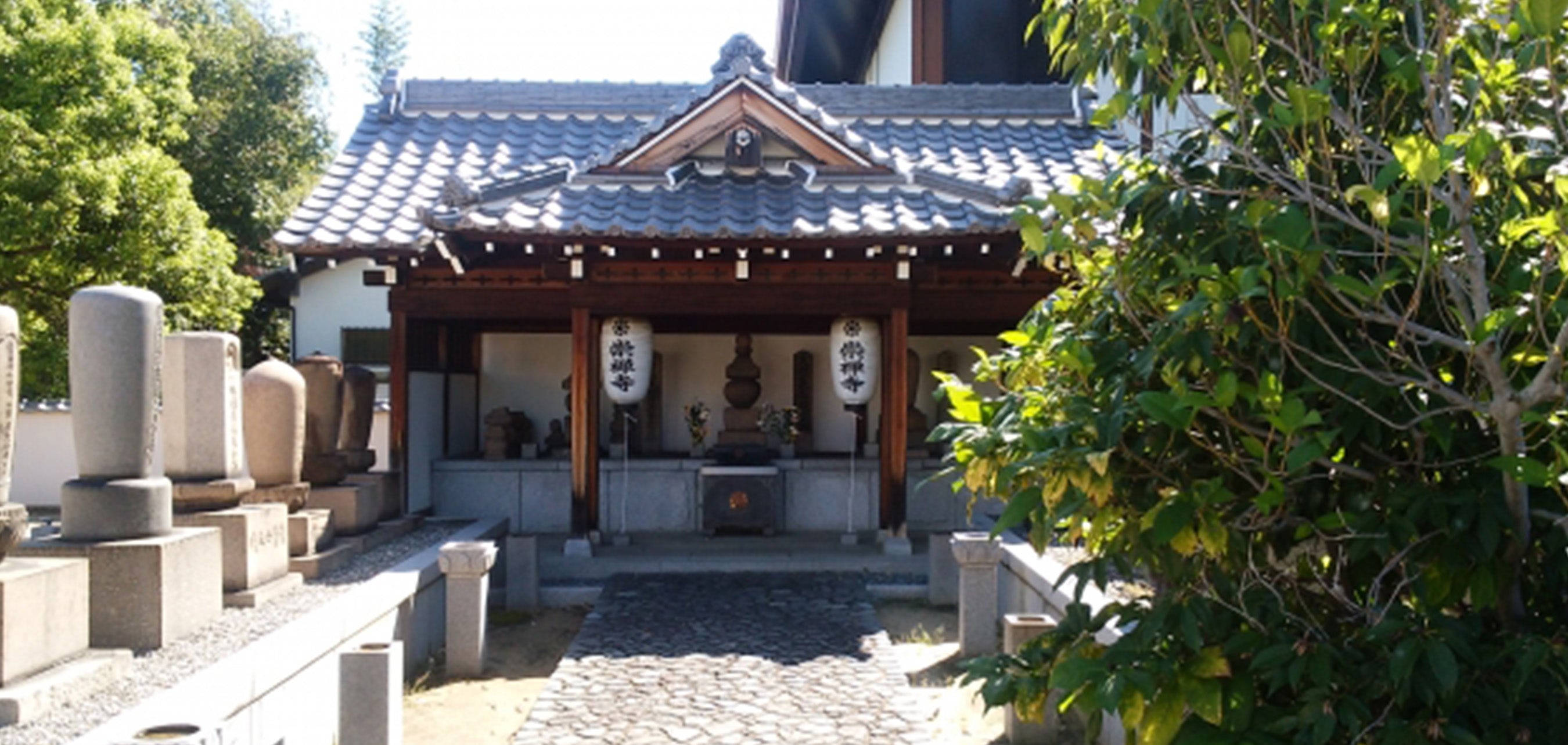
Various customs related to Higan remain throughout Japan.
In some regions, in addition to botamochi and ohagi, there are customs of offering local Japanese sweets or regional dishes.
Some families invite monks to hold memorial services during the Higan period, while others only visit graves.
Some regions also have customs of placing flags on graves or using unique decorations.
There can be subtle differences in the order of grave visitation or how incense is offered depending on the region.
Thus, it is important to understand these various differences and respect others' customs.

In modern times, as nuclear families become more common and more households have distant graves, the way people observe Higan has also changed.
Even if you live far away and cannot visit the grave, it is important to remember the deceased in your heart and offer prayers. There are also options to send flowers or offerings by mail, or to ask a monk to perform a memorial service.
Higan is not just about observing formalities; in modern times, it emphasizes the meaning of "gratitude to ancestors" and "deepening family bonds" as important opportunities.
Even if you are short on time or need to send items to a distant location, online shops make it easy to prepare high-quality offerings and flowers and have them delivered directly.
Without being overly bound by formality, finding a way to pay respects that suits your family and your feelings for the deceased can be considered the modern way to observe Higan.

Higan is an important Japanese Buddhist event that occurs twice a year, in spring and autumn, to remember the deceased and express gratitude to ancestors. Its origin lies in a Buddhist term meaning "the world of enlightenment," and it has developed into a unique Japanese tradition by combining with sun worship.
During the Higan period, important activities include visiting graves, cleaning Buddhist altars, offering botamochi/ohagi and other items, and offering flowers. Flowers, in particular, are an important gift that conveys feelings of remembrance for the deceased and comfort for the bereaved.
At &YOUKAEN, we offer Higan flower offerings! Our florists carefully create each flower arrangement and bouquet using plenty of seasonal flowers. They can be used for your own home or as a gift for loved ones. Please use &YOUKAEN's flower offerings for Higan.